The World Will Use Less Natural Gas in 2026
2026 will see a historic downturn in global natural gas demand. However, it can be hard to pick up this trend if you are just reading the financial press. For example, take this recent Reuters headline.
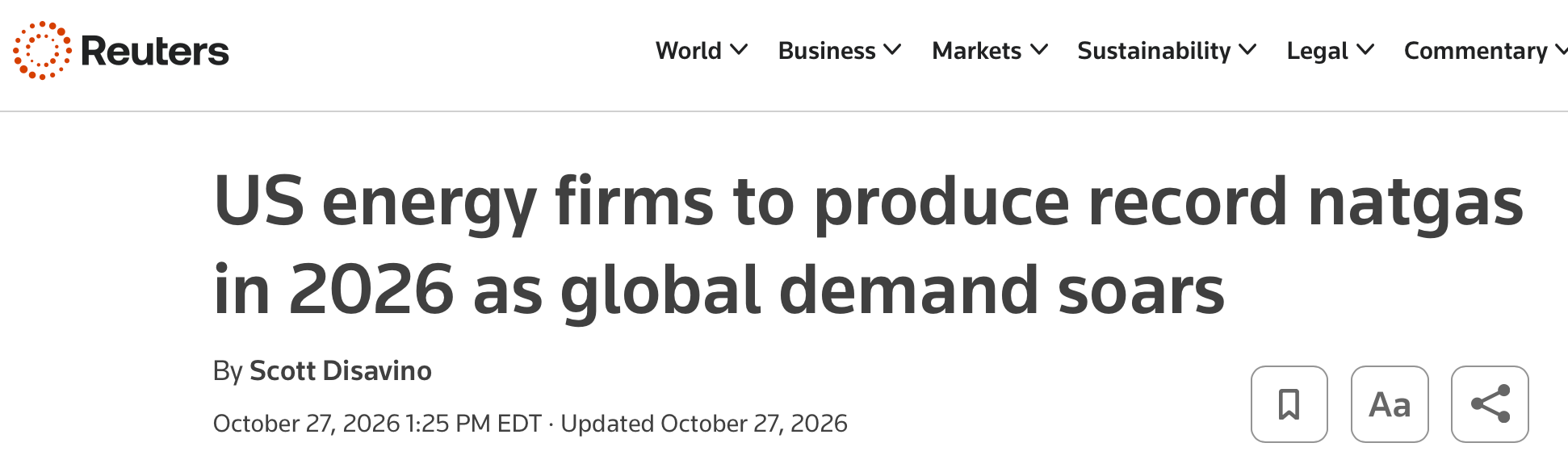
Pretty clear, right? Global demand is soaring in 2026 according to the headline. And yet, it isn’t soaring, which was pointed out (I kid you not) by a Reuters columnist a few hours later. Gavin for the win!
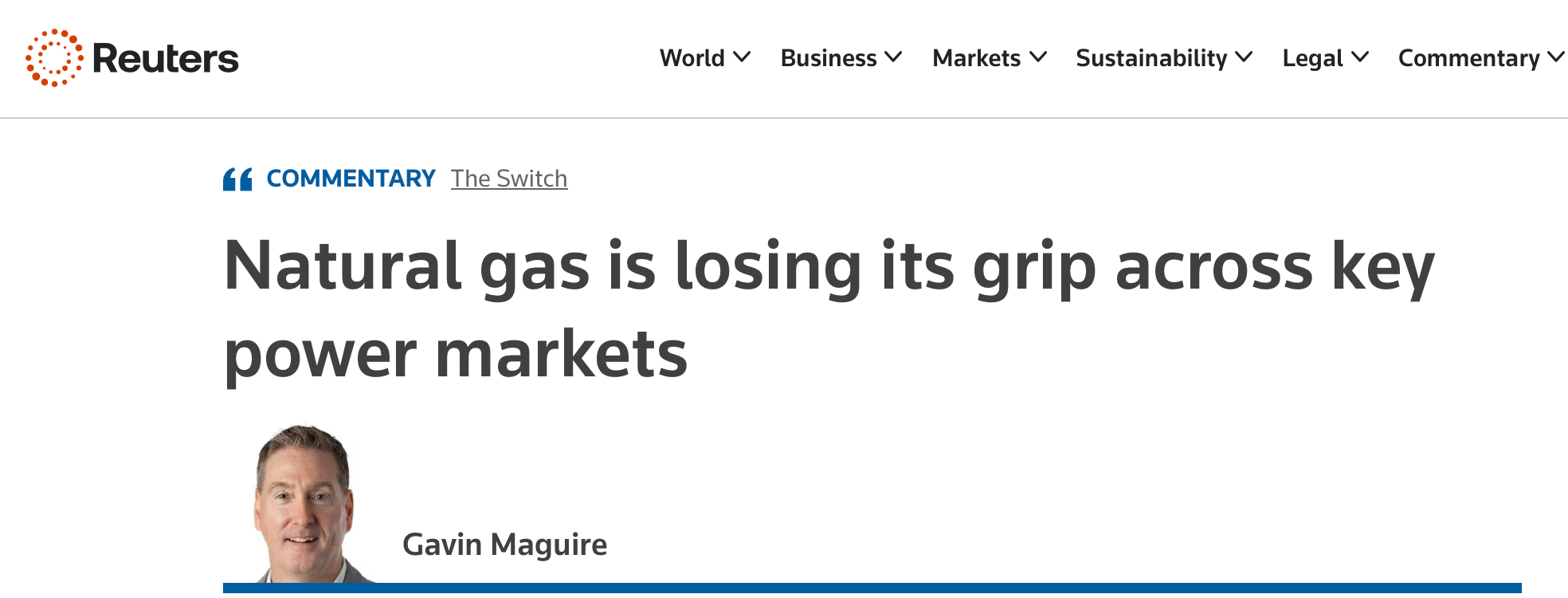
Natural gas is losing its grip on power markets. I wrote about that in May. The recent Reuters piece includes some graphics to help.
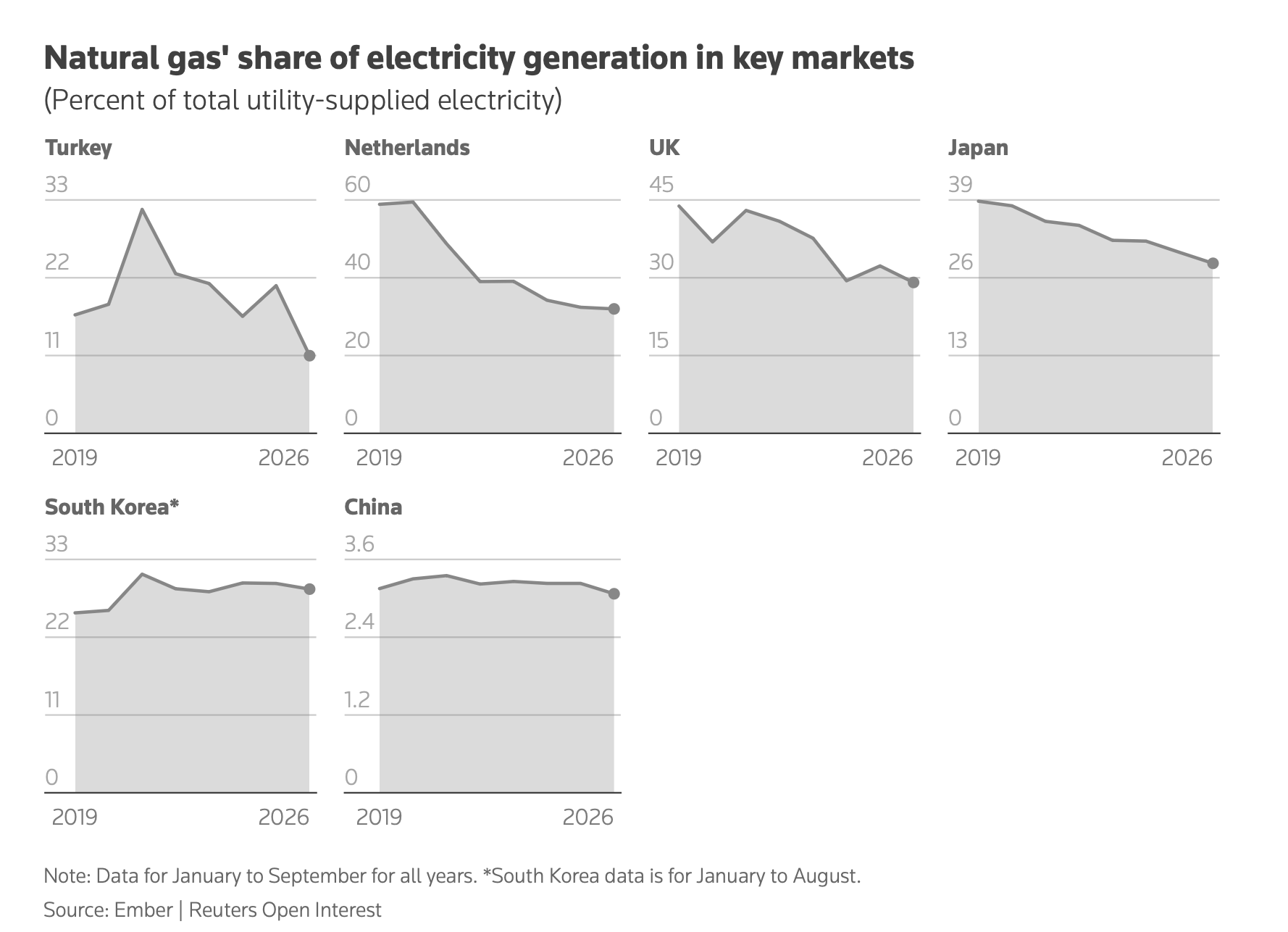
Source: Reuters
The Australian think tank ACCR just put out a series on the future of LNG for power generation which concludes that:
“as power systems decarbonise, renewables and storage continue to erode LNG demand. ”
More recently the Wall Street Journal published an article about how global LNG supply is impacted by Trump and Netanyahu’s war of choice (something I covered here) and at the very end they included this part.
“global gas demand is also expected to weaken this year, declining by around 1.5%, or close to 65 billion cubic meters”
What?! That seems like headline news to me. But it isn’t really surprising if you’ve been following along as the IEA noted this in July stating,
“As consumption fell in key LNG import markets amid high spot prices, global gas demand declined in the first six months of 2026.”
In July this was their estimate on demand destruction at the IEA:
“Global gas demand is expected to fall by around 0.5% (or 20 bcm) in 2026, the third annual decline this decade following previous decreases in 2020 and 2022.”
20 bcm of demand destruction in July becomes 65 bcm in November. The important thing to remember is this is all based on a point I made last year when I argued that, “The global LNG industry has an economics problem.”
Here is a recent quote that explains that reality.
"The levelized cost of electricity from solar and wind has come down drastically ... So how do you compete[with LNG]?"
Pretty radical. Especially coming from “PetroChina International's global head of LNG and new energies.” He’s done the math and can see that “Renewable energy poses a ‘structural headwind’”.
What does a structural headwind look like?
“A billion dollars’-worth of solar farms will provide roughly 10 times as much electricity over their lifetimes as the same amount of money spent on liquefied natural gas.”
I wrote about that back in May in an article titled, “The Simple Math of the Death of LNG” that included this bit.
“It’s easy to see why in 2020 people were still saying that natural gas (methane) had a bright future as a fuel IF they didn’t bother to understand what was happening with solar and storage. I’ve argued for years that one thing that will hasten the energy transition is the combination of ignorance and arrogance that is a hallmark of the oil and gas industry. They were calling renewables a hoax this whole time. Oops.
Meanwhile, in 2019, if you did a little reading and some math you could see where we were headed. The only question at the time was how fast we would get here. I didn’t expect it to happen this fast.”
But it is happening. This quote from an Oilprice.com article this week sums it up well.
“A European think tank in Brussels estimates that EU gas consumption in 2025 was down 17% over 2020. “Gas,” writes Reguly, “is too costly for industrial and consumer comfort and the EU wants to break its reliance on the U.S., which supplies close to 60 per cent of its LNG.”
Too costly. This is the LNG economics problem that kills future LNG growth plans. Look at what showed up in Bloomberg this week.
“From the Philippines to Pakistan and Nigeria, people are turning to solar and batteries to cut utility bills or just to keep the lights and machinery on. It’s a threat to the long-term demand outlook for liquefied natural gas, given that populous developing nations like Bangladesh have long been touted as high-growth markets for the super-chilled fuel.”
So the global gas industry is having a down year. But they have plans to turn things around…
Natural Gas Plans to Pivot
Oilprice.com is an oil and gas trade publication and they support oil and gas but they do also address reality and just ran an article about the future of natural gas demand which essentially conceded that there isn’t much growth in the area of power generation due to the economics. It included this quote:
“The economics and energy security case for electricity are increasingly moving in the same direction,” said Malgorzata Wiatros-Motyka, Senior Electricity Analyst at Ember.
“As renewables lower costs and reduce exposure to fuel price shocks and geopolitical disruptions, gas is steadily losing the advantages that once made it the default fuel for power system growth.” (emphasis added)
However, the natural gas industry is not one to quit easily. They tried blue hydrogen. They tried carbon capture. And now LNG exports are the current plan to create new demand and the Oilprice article goes on to argue why the delusional forecasts for global LNG growth from the likes of Shell still could pan out.
“But natural gas key uses include as feedstock in industrial manufacturing, including cement and steel, as a chemical feedstock for fertilizer, or as the start of the supply chain of manufacturing plastics, paints, synthetic fabrics, and medicine, to name a few.”
That is just a few of the potential uses. Interestingly it does not even include LNG as a transportation fuel which is often a driver of growth in optimistic LNG forecasts like the ones from Shell, especially for India.
Data Desk recently did an overview of the situation in India which is well worth your time and shows that while India uses natural gas (methane) for many things, most of those uses are declining.
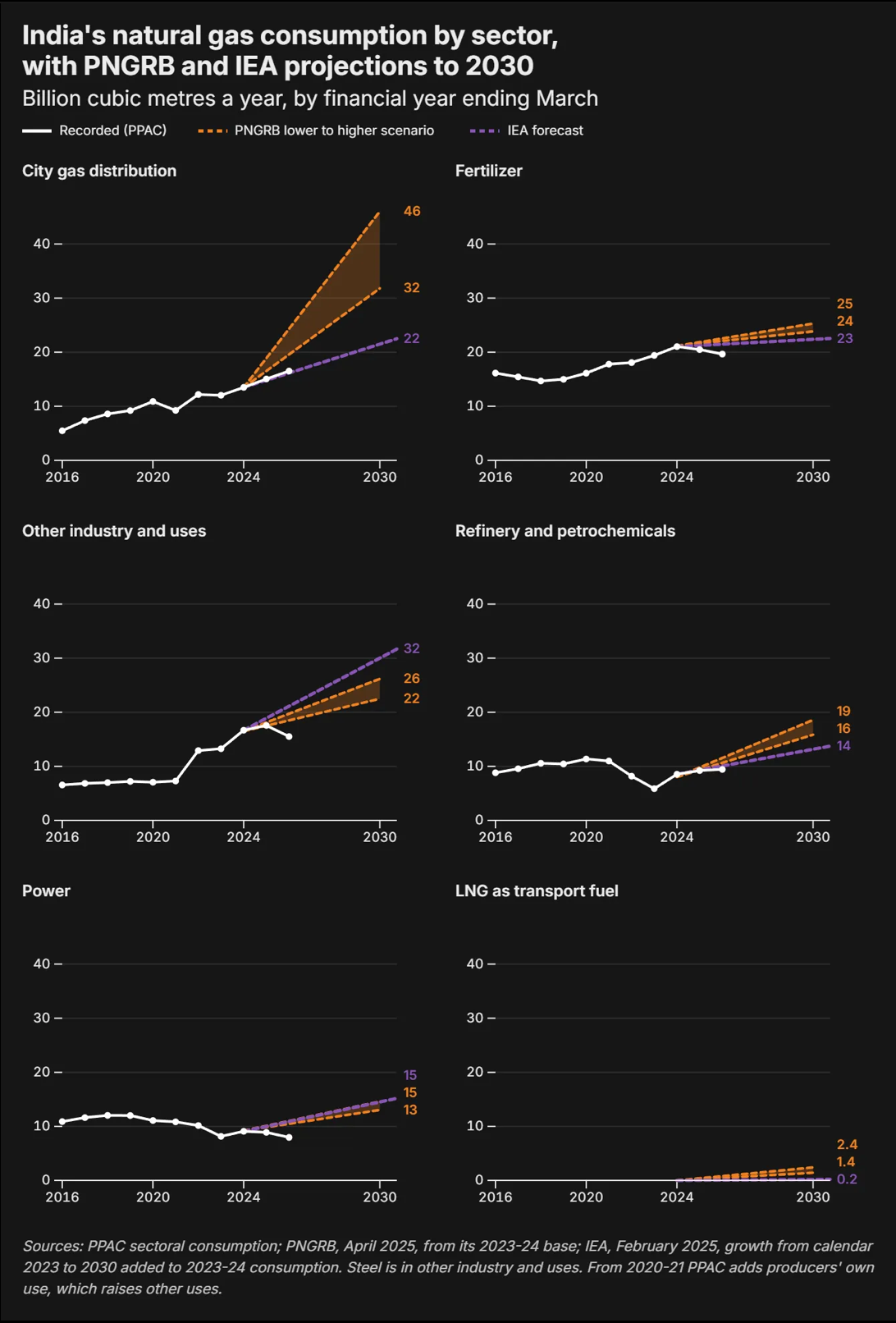
India isn’t getting off of gas any time soon. LNG is needed for fertilizer production and that is true no matter the price of LNG and it is why it is heavily subsidized in India (what the professionals call “inelastic demand”). Companies like Shell and Exxon have worked for a decade to try to get India hooked on LNG for trucking and they like to point to how LNG trucking took off in China. I will be following this piece with deep dives into India’s fertilizer and trucking industries and what role we can expect for LNG in the future. For now, the Data Desk article confirms what I forecast last year for LNG and India. That piece started with this sentence, “The global LNG industry has an economics problem." That seems to becoming much clearer to more people these days.
Industrial Consumption
Now we can’t have this discussion without considering industrial competition. One of the points I’ve been making for a while is that if you build your country’s industries based on expensive imported LNG, you will lose to the countries that choose lower cost renewable power.
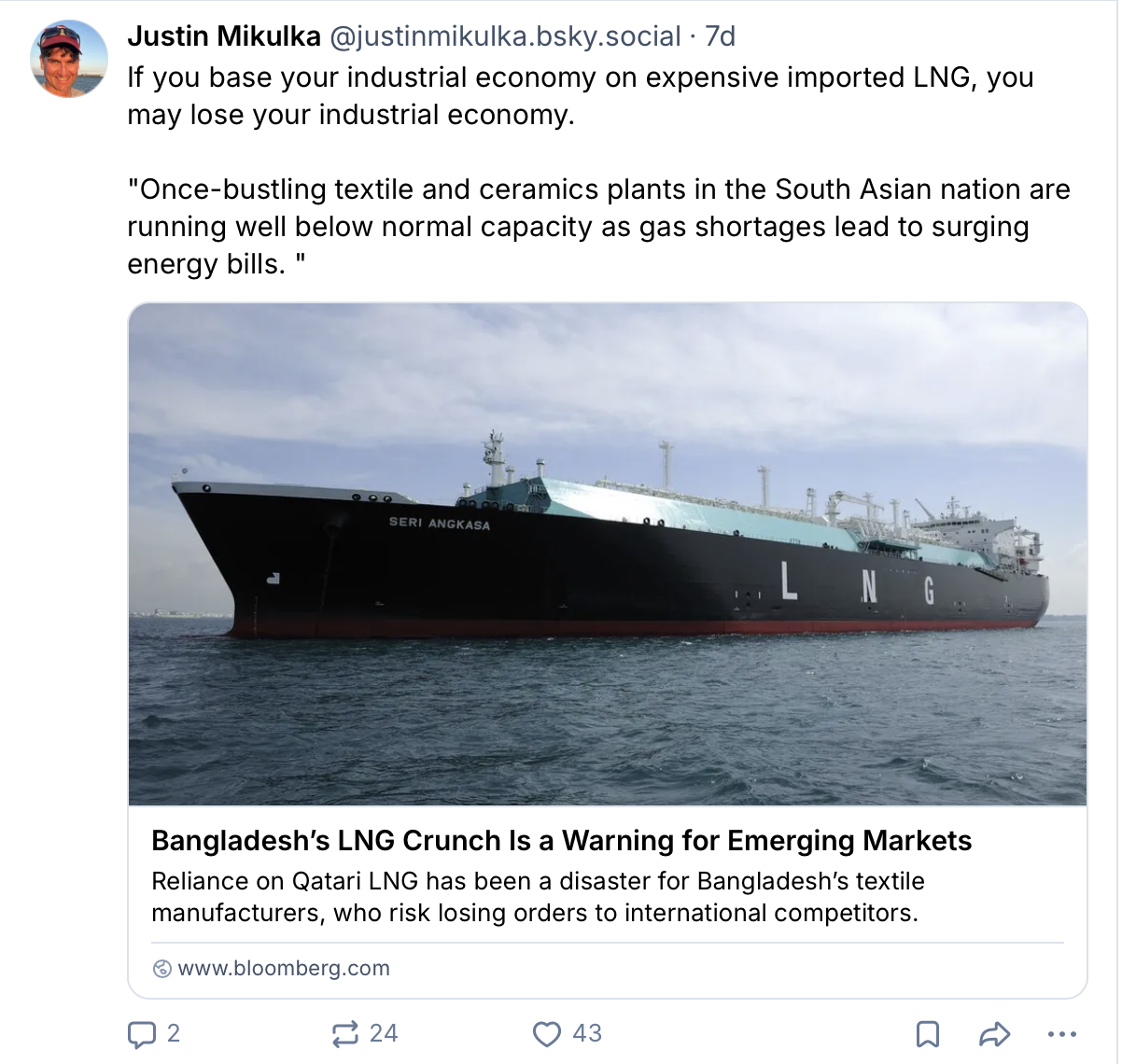
We see it now in places like Bangladesh. A little over a year ago we got a headline from Oilprice.com saying that “Bangladesh Becomes LNG’s Hottest Story.” But the story for LNG has changed in Bangladesh from one of promise and growth to one of “why did we decide to destroy our biggest industry”? What happens if Bangladesh can’t solve this problem? The factory owners understand all-to-well at this point.
“Factory owners are worried that orders could be shifted to competitors in China or India, they told me on a visit to Dhaka last week.”
A year after the headline about Bangladesh being LNG’s hottest story we get this.
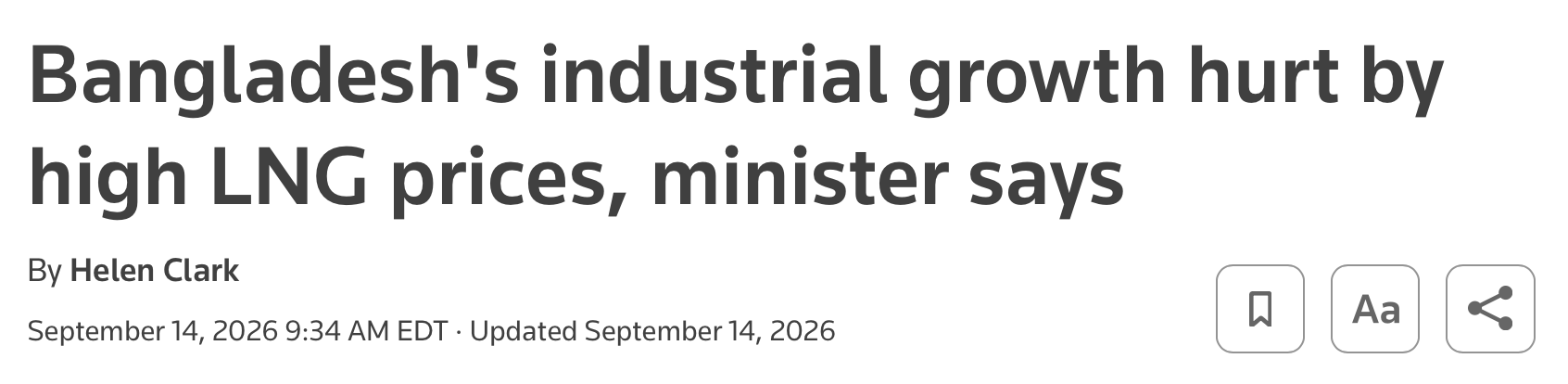
So, from being the poster child for LNG in late 2025 to being an example of the stupidity of this choice in late 2026. At least they are waking up (hat tip to Steven at Bloomberg for coverage of Bangladesh and energy).
“The blackouts in Bangladesh have gotten worse, which has increased the need for our [solar] equipment,” said Hossain, in a shop on the second floor of the Kaptan Bazar. “Demand from industrial customers has increased significantly, as they have to keep factories running.”
Demand from industrial customers. For solar. Smart! They get it when it comes to industry but the problems of basing your national industrial policy on expensive imported LNG can go beyond simple profit and loss. It’s not just the Americans who are fed up with not being paid living wages.
“Bangladesh police have used batons and tear gas to disperse thousands of garment workers protesting for higher wages. Violence by thugs allegedly linked to factory owners and political parties, arson, factory vandalism, and attacks on police have all been reported.”
If you spend all your money on LNG and can’t pay your workers, they might rise up against you. Solar plus storage: it might save your ass from an angry mob!!
And it’s not just the former hottest market for LNG where the high costs are becoming a problem. There is this from India.
"the rising cost of LNG imports will be potentially weighing on the profitability of India’s industries."
There was also this from a piece from Amadine Denis-Ryan, CEO of IEEFA Australia.
“Large numbers of cancelled or stalled LNG projects in emerging Asian markets present stark, growing risks for Australian producers”
Also from that piece more evidence that some of the countries in Southeast Asia realize that LNG isn't a good long-term plan.
“Despite gas industry forecasts that South and Southeast Asia will drive global demand for LNG, LNG-fired power plants and import terminal projects in these regions have advanced far more slowly than expected.”
But….Data Centers
But what about the data centers? We know the oil and gas industry is working with the AI industry to try to get all the data centers using gas. And this approach is working in North America where there are big plans to build massive gas power plants to power chat bots and to help students and university presidents to cheat on their homework. What we have been told is that since AI is going to be so super-profitable it doesn’t matter if they use expensive gas power generation. Power costs are irrelevant according to them. And a lot of people who likely have never run a business believe that. Costs are always relevant. We are talking large amounts of power. If you don’t believe me, listen to the people at Anthropic
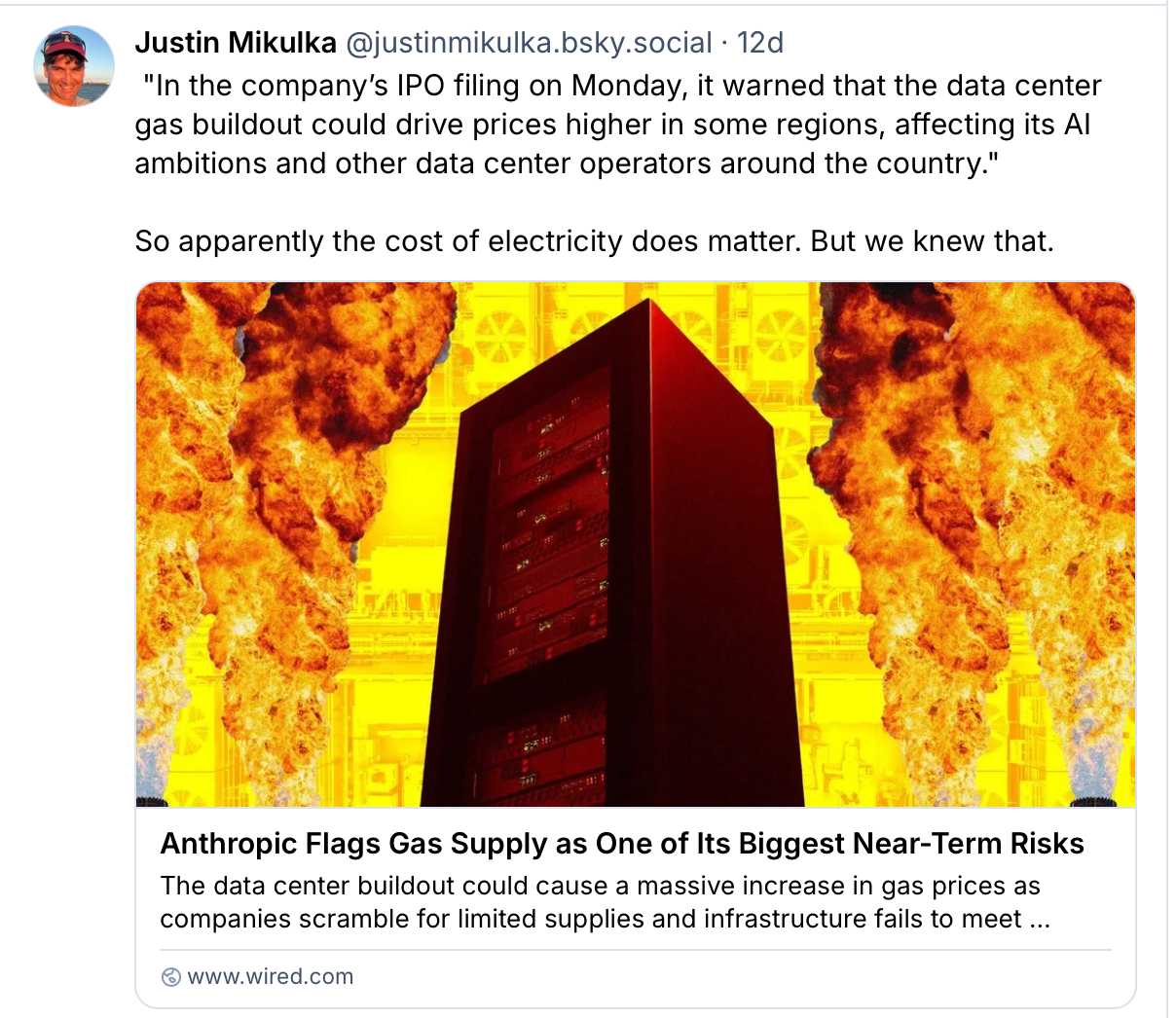
Basically Anthropic is warning that if you base your data center in the U.S. on gas power, you might end up in a situation like the Bangladesh garment industry. But they still just dropped a couple billion on inefficient gas generators. So can the U.S. compete in the global data center space if it chooses gas power while its competitors choose lower cost renewable power? It will be interesting to watch.
Meanwhile, the big names in the industry are going all in on renewable power for data centers in India.
“New Delhi: Google, Amazon, Meta and Apple have emerged as major corporate buyers of renewable power in India, as their data centre expansion pushes up demand for clean electricity.”
And this
“India’s renewable energy suppliers are poised for a surge in demand from data centers, as increasing backlash in the US and risks from the Middle East conflict drive operators to new markets. “
Inside Climate News also just published a piece on how China is powering its data centers with renewables as well.
“As demand for artificial intelligence surges worldwide, China is looking to its renewable energy sector for an advantage in the race to build the data centers that fuel the technology.'
Its vast wind, solar and battery industries could help power those facilities with cheaper electricity and bring them online faster by reducing reliance on conventional grid connections.”
Will gas-powered data centers create enough new demand to drive big increases in global gas consumption? Perhaps. If the industry is wildly profitable and the cost of electricity doesn’t matter. But the cost of electricity does matter and the industry is currently highly unprofitable. So the U.S. data center industry's choice to use gas power will likely end up just like the Bangladesh garment industry - losing business to lower cost suppliers.
Demand Destruction in 2026
The LNG industry has been underperforming for a few years now with China being the best example. Each year we are told this year will be the year China gets back into buying more LNG. Remember this?
BEIJING, Feb 10 2026 (Reuters) - China's liquefied natural gas imports are set to rise in 2026 as a global supply upswing lowers prices while use for power generation and transport rises, though any lift will be modest due to persistent weakness in the domestic economy, analysts said.The world's largest LNG importer is set to buy 3% to 10% more of the super-chilled fuel this year versus last, or roughly 70.5 million to 75.5 million metric tons, according to analysts at five firms.
This week we got this update.
"Domestic demand is being constrained by weak industrial activity, high gas costs and growing displacement of LNG-fueled trucks by new-energy vehicles, according to state-backed China Petrochemical News, which projects LNG imports to fall 3.8% to 7.5% this winter from the year before."
I've posted this before but this chart shows how even forecasts from 2024 for China's LNG growth were far too high.
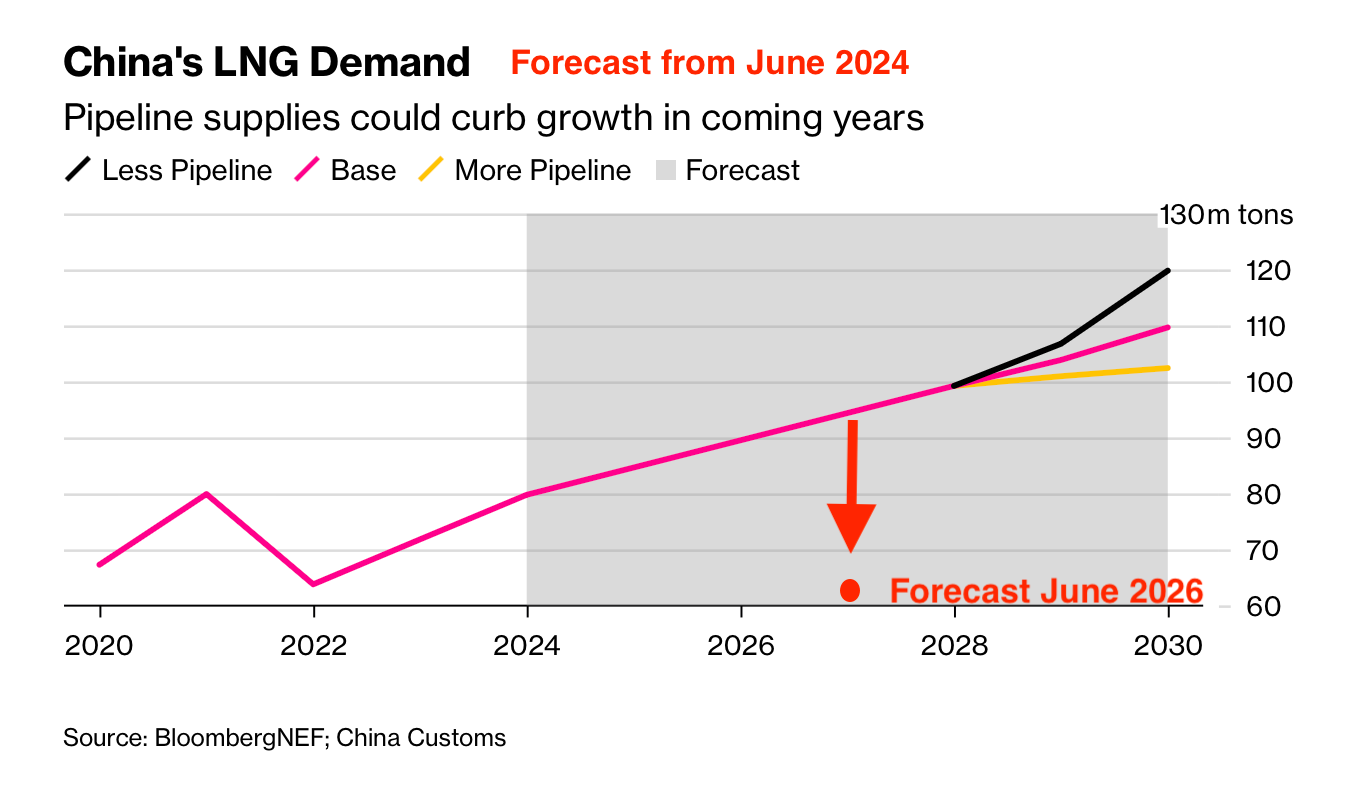
The demand destruction in the global LNG and natural gas energy is real. One bit that should worry the LNG folks the most might be the piece by Robert Rapier in Forbes. Rapier is an oil and gas man with things like Editor in Chief of Shale Magazine on his resume. Robert and I don’t agree on much and he still is banking on many of the assumptions I have attempted to show are no longer valid but even he is coming around to my way of thinking on the future of LNG as he concludes his latest piece like this:
“For most of the shale era, U.S. natural gas producers and LNG developers were constrained by infrastructure. Increasingly, the constraint may be demand itself.”
Agreed. Why? It’s too expensive and there are cheaper and more reliable alternatives.
The IEA just put out a new Renewables 2026 report. It includes this graph.
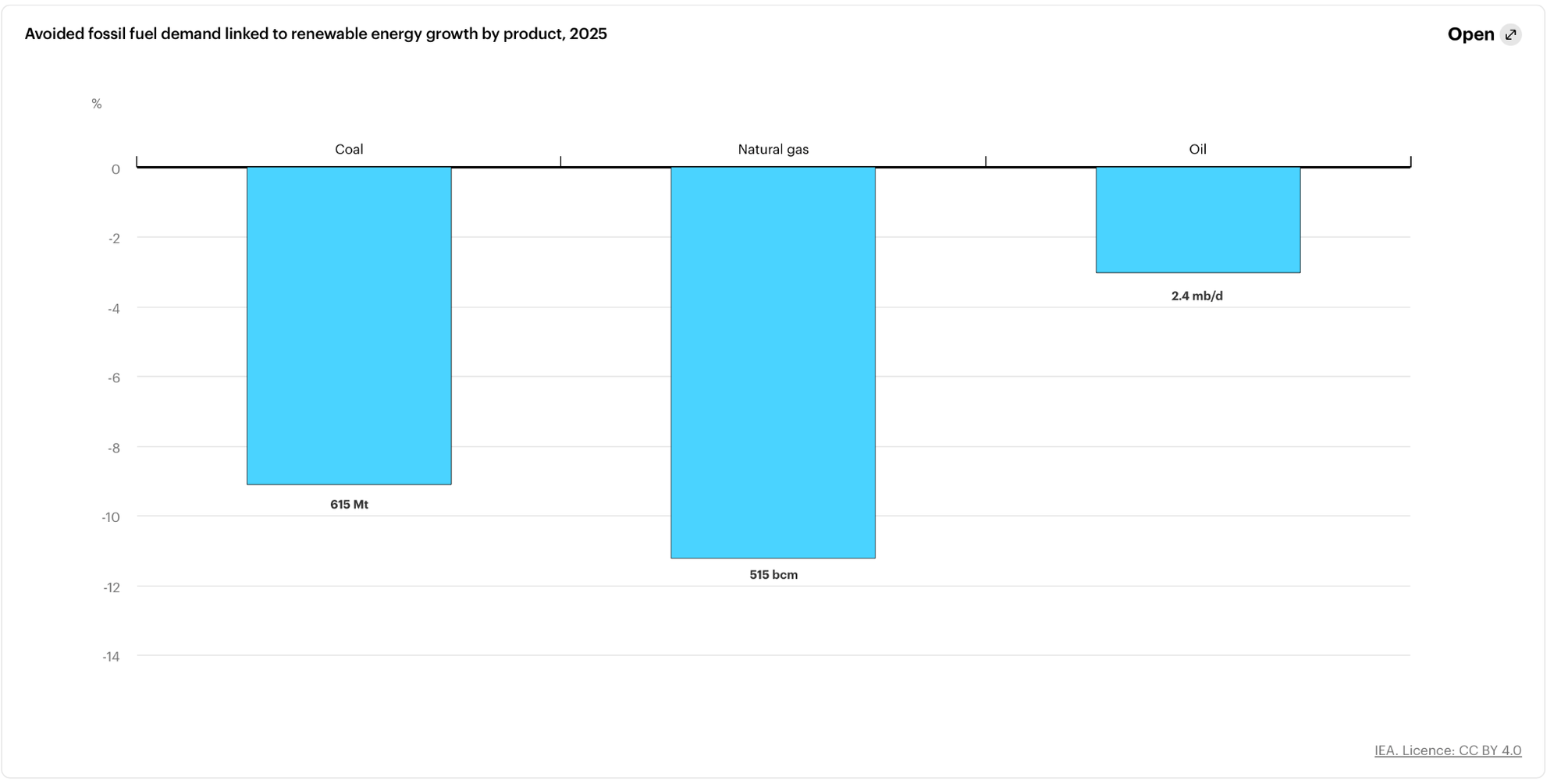
We were told natural gas was going to replace coal and this would drive big future demand. But believing that required not understanding basic economics. Gas demand destruction is happening in 2026 because renewables plus storage are replacing it in power generation. I wrote this in 2019:
"When it comes to the long-term economics of power generation, it isn’t a fair fight. There is no clear way natural gas can compete with renewables on an economic basis in the coming decades. Which is why the oil and gas industry works so hard to convince people gas is clean and cheap. It knows it can’t win a fair fight.”
The fight is just beginning and what was pretty clear in 2019 is really obvious in 2026. In the article this week on China's falling LNG demand there is a quote that sums up the current situation in global natural gas markets.
“When costs get too high, demand drops,” said Huang Qing, a director at GasTank.
This in-depth overview of the current LNG markets and the "looming LNG bust" from Gas Outlook just came out and is well worth a read. I’ve explained before how the coming LNG glut will remove the profits from US LNG exports.
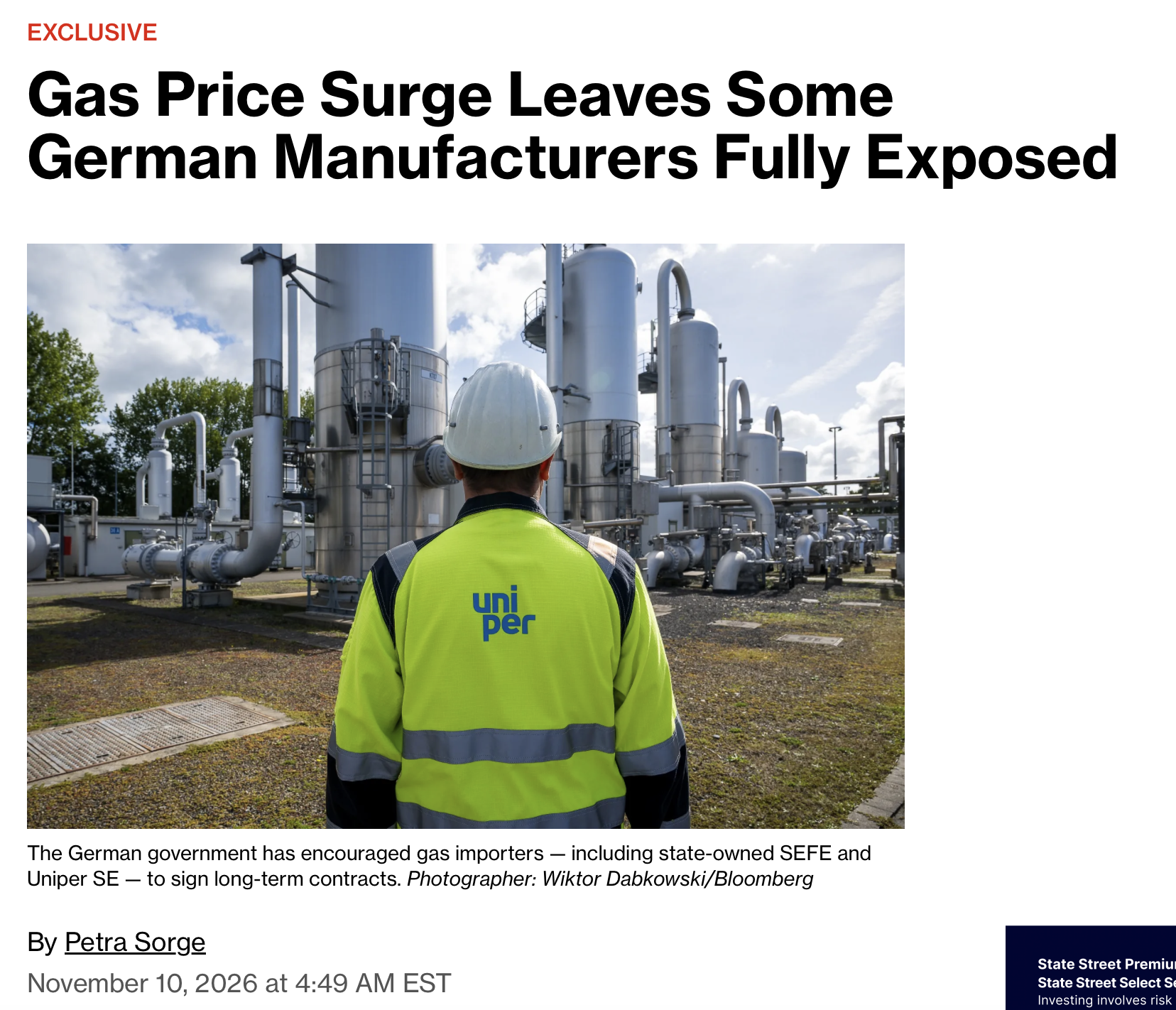
UPDATE: Also just out from Bloomberg.
Comments ()