The Simple Math of US Oil Exports
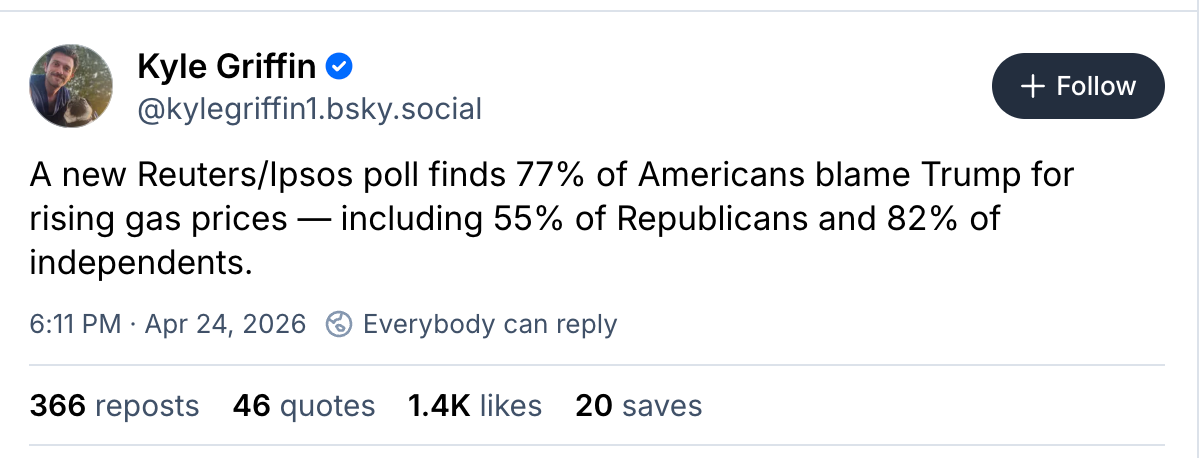
President Trump and many of the traditional oil industry cheerleaders and propagandists are selling a very big lie right now about the U.S. oil industry. They want people to believe that while oil companies make record profits exporting U.S. oil to the rest of the world, that this has no impact on gasoline prices here in the U.S. And while the U.S. public is incredibly gullible on many topics and often seem eager to believe lies that reinforce their worldview – it’s proven historically difficult to lie to them about the price of gasoline. The general public can do the simple math of “$4.50 a gallon is higher than $2.50 a gallon” so Trump and the cheerleaders have a problem.
The Wall Street Journal summed up the real situation nicely:
“In short, prices at the pump are poised to keep rising if the U.S. exports more oil and gas and drains its inventories.”
“We have plenty”
In early April the Wall Street Journal reported that President Trump said that any countries worried about not being able to get oil and gas – due to the war that Israel and the U.S. started – should just buy oil and natural gas from the U.S. and he assured buyers, “We have plenty.”
Regular readers of this site are aware that we do not have plenty of excess oil for exports as I explained in this piece in 2024 titled, “America’s Oil and Gas Export Delusions.” I will get into the details of that in a bit but first I’d like to take a look at how it's clear the financial press is starting to grasp this on some level. We can see they are actually starting to push back on the absurd lie that exporting U.S. oil, natural gas and refined products (gasoline, diesel, jet fuel, etc) doesn’t raise the price of those products in the U.S.
The week the Wall Street Journal reported the facts on the big jump in U.S. hydrocarbon exports:
“The U.S. is shipping more oil abroad than ever before, drawing down domestic stockpiles to help fill the gap left by the energy shock from the Iran war.
America exported nearly 12.9 million barrels a day of petroleum last week, according to the Energy Information Administration, with skyscraper-sized tankers ferrying crude, gasoline, diesel, jet fuel, propane and more.”
The U.S. consumes around 20 million barrels per day of those same products and the cost of all of those products is going up fast. Notice how the WSJ mentioned that these exports were “drawing down domestic stockpiles to help fill the gap.” One strong traditional indicator of price action in domestic markets is the current inventory (stockpiles). You will see them mentioned at least once a week in the WSJ. Low stockpiles mean higher prices here in the U.S.
This week the Financial Times published an article about the record number of empty tankers on the way to the U.S. to fill up with crude oil, LNG and refined products. It includes all the normal bits on how this is great for U.S. oil and gas producers and that they will be selling to anyone willing to pay. However, they did sneak in a rebuttal of the big lie we are consistently sold.
“The White House is treading a delicate political line: the rush for US energy and high international prices are lifting profits for producers, but also pushing up costs for American consumers ahead of midterm elections in November where Republicans are facing a fight to hang onto both houses of Congress. Petrol prices in the US are now averaging above the politically sensitive threshold of $4 a gallon.”
They acknowledge that exports are “pushing up costs for American consumers.” It’s good to see the Financial Times still believes in the simple math of supply and demand. Axios also ran a piece that quotes an S&P analyst who also acknowledges reality.
"With petroleum product exports now at record levels, S&P Global Energy refining analyst William O'Neil sees port constraints, but also another factor: inventories of diesel and other products are falling quickly.
This, plus refineries running at high levels, suggests today's levels "cannot be sustained indefinitely before domestic inventories become tight enough to incentivize refiners to reduce exports," he tells Axios.
So if we start running out of fuel in the U.S. it will “Incentivize [US] refiners to reduce exports.” Pretty obvious. Refiners do a lot of business selling gas and diesel to the U.S. market as the U.S. is the largest consumer of these products in the world. Will they shut down their refineries in the U.S. if they can’t get enough crude oil or will they demand that we stop exporting U.S. oil to the world? It seems likely we will be having the discussion in 2026 on a national level. That discussion is certainly already happening in some board rooms and political offices. The WSJ also published this recently.
“It may be a win for U.S. exporters who are collecting fees for loading vessels and traders who may be making money by selling oil,” said Andy Lipow, president of Lipow Oil Associates in Houston. “But I don’t think the consumer feels like it’s a win for them in the face of rising prices.”
Bloomberg also weighed in on the issue:
“If futures don’t catch up to the physical realities, US exports could easily remain elevated, vessel availability permitting, to the point where there isn’t enough crude left for US refineries.” Amrita Sen, co-founder of consultant Energy Aspects.
Even Reuters snuck in the truth into a recent article while also posing a very important question.
“The sharp rise in U.S. crude and product exports will obviously be beneficial to U.S. energy producers, but probably not so much for U.S. energy consumers, as domestic consumers effectively have to compete with overseas buyers for U.S. supplies.’
There is the acknowledgement of the basic laws of supply and demand. They even made it really simple with the statement that rising exports mean domestic consumers will, “compete with overseas buyers for U.S. supplies” although they didn’t include the obvious conclusion which is that this situation results in higher prices for domestic consumers.
But then they do get to the most interesting part of this situation.
“It also raises the question as to how long can the United States sustain exports at the levels being seen in April and May.
It's likely that some of the crude being exported is available because of the release of strategic reserves.”
That last bit is interesting. Strategic reserves are supposed to be for national energy security, not for oil industry war-profiteering exports. But Reuters points out that if we are exporting our strategic reserves and the WSJ is reporting that we are “drawing down domestic stockpiles to help fill the gap” that means this can’t continue forever.
It is new to see the financial press addressing the obvious facts that the oil companies and politicians don’t want you to know – that exporting oil and gas to the highest bidders around the world raises prices for those same products in the U.S. However, none of these publications are talking about the real problem with this scenario. U.S. oil production is in decline.
Increasing Oil Exports With Declining Oil Production
In November of 2024, current Treasury Secretary Scott Bessent stated that once he and Trump were in power, they had a plan for U.S. oil production.
"Three million more oil barrels equivalent a day from U.S. energy production. That would be my 3-3-3. That would substantially decrease the oil price, which – that's one of the No. 1 drivers of inflation expectations."
Their plan would involve increasing U.S. oil production by 3 million barrels per day. In December of 2024 I pointed out that Bessent was clueless and made the following statement.
"The true hoax of this energy transition is the idea that the U.S. has unlimited oil and gas that is just waiting to be produced as soon as those tree-hugging liberals stop standing in the way."
I made another point in that piece that is quite relevant to today’s discussion.
“we could certainly increase crude oil exports by taking the oil currently used by the American public and selling it to other countries.”
This is what we are doing now. And it will result in higher prices at the pump in the U.S. As I have pointed out over the years, the American public has been sold a lie that we have endless cheap oil and gas in the U.S. My recent overview on the reality of U.S. oil production hits the main points and concludes with:
“[Continental Resources Harold] Hamm admitted the Bakken is “tapped out.” The reason he is buying shale assets in other countries is because the reality is that the U.S. oil industry is tapped out.”
This graph makes that pretty clear.
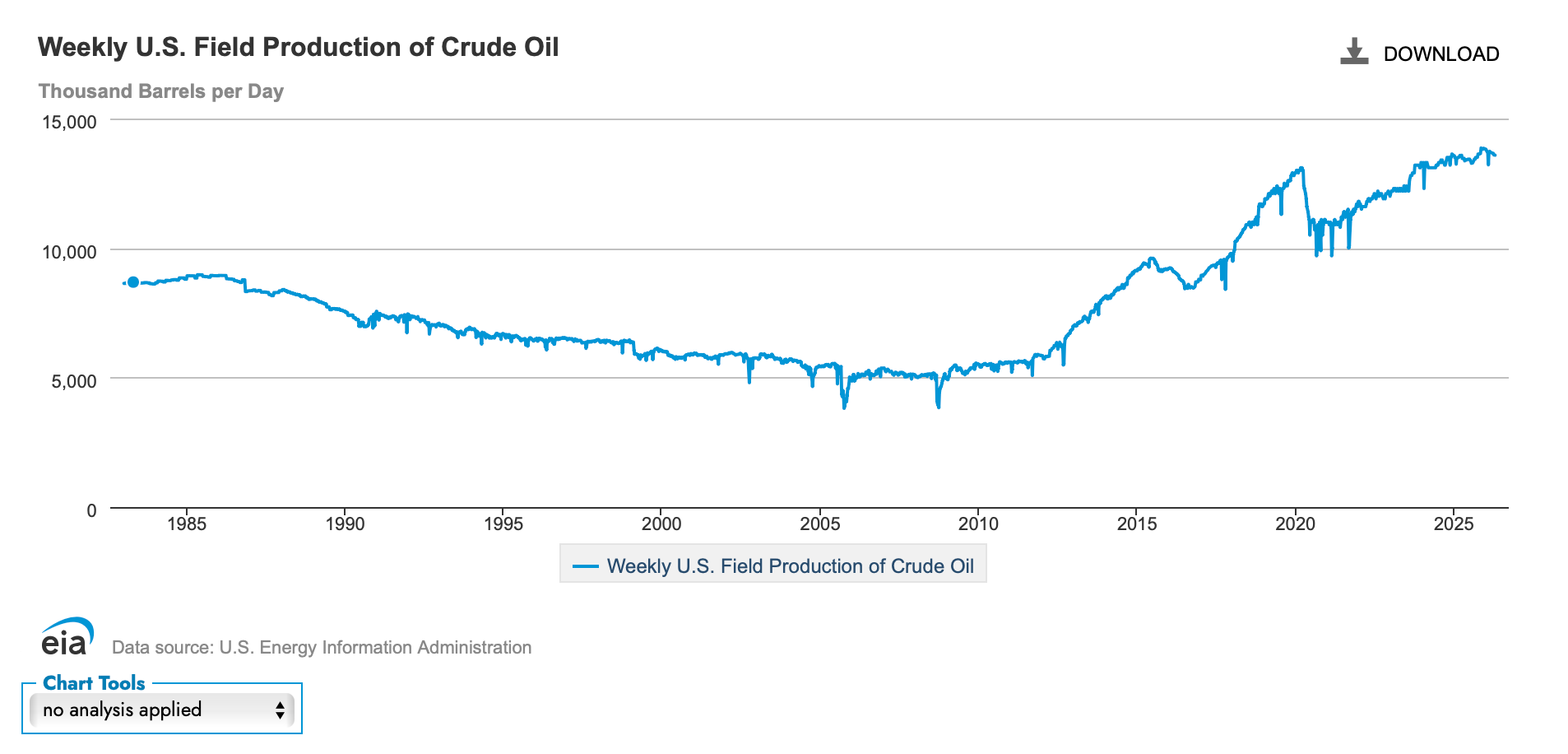
It isn’t that hard to understand that if U.S. oil production doesn’t go up and the U.S. starts exporting significantly more oil, then that means less oil for the U.S. refineries and that means higher prices at the pump. Bessent and Trump have been in power for almost a year and a half and oil production has not gone up by 3 million barrels per day but has instead gone down. This is simply because the oil isn’t there. The U.S. shale industry has used up a lot of its best shale oil reserves and what remains does not produce as much oil and is more expensive to produce. But you don’t have to believe me or the facts as the oil industry is now saying the same thing.
In the latest Dallas Fed survey of oil executives they were asked, “By how much do you expect U.S. oil production to increase in response to the Iran war in 2026 and 2027?” Now remember, oil prices are around $100 and have been for a while. We are expecting elevated oil prices for quite a while. And despite that…
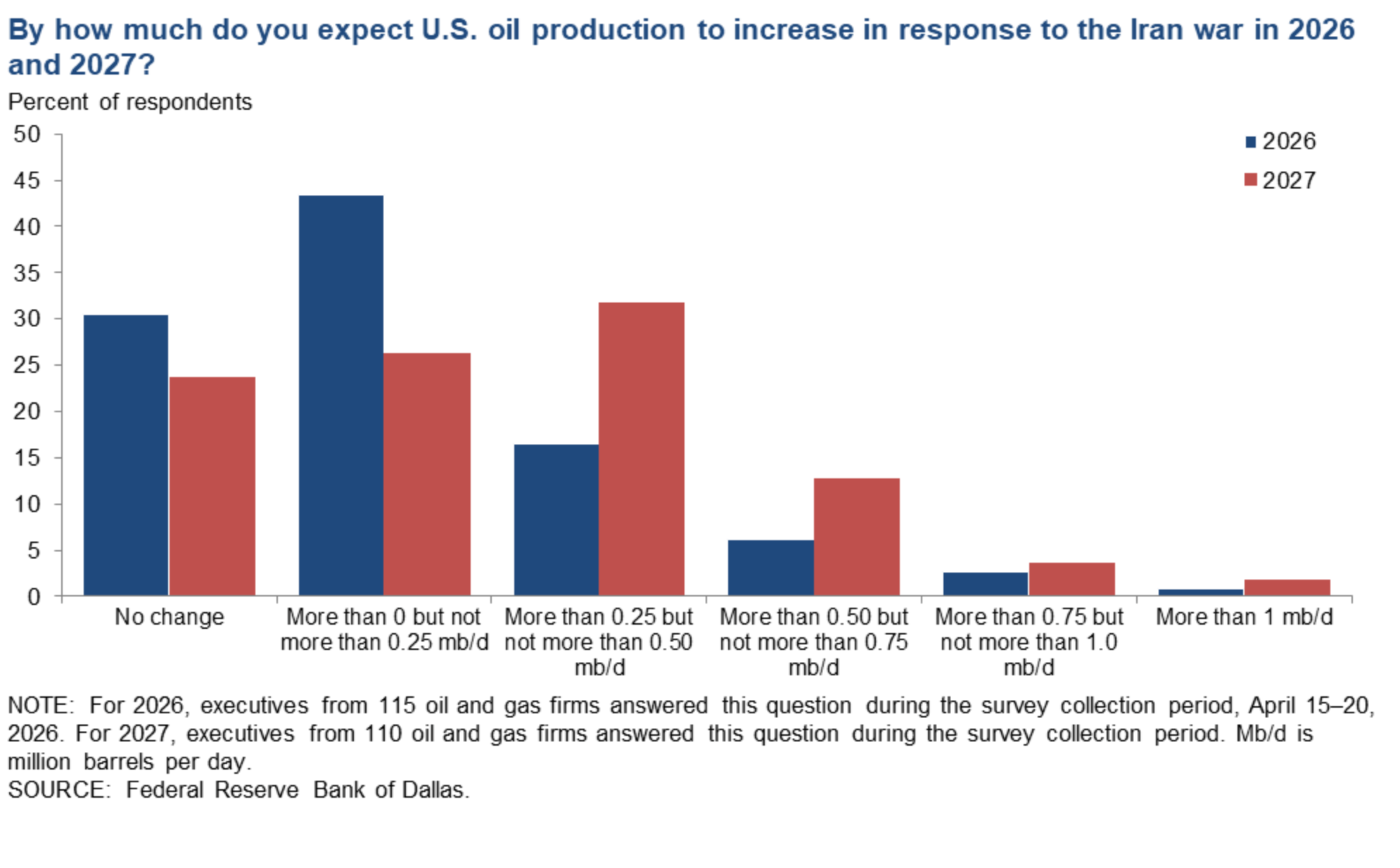
This article on Yahoo via Fortune summarized the results.
“When asked how much they expect U.S. oil production to increase in response to the Iran war, 30% predicted no change this year, 43% saw an uptick ranging from 1 to 250,000 barrels per day, and 17% put it at 250,000-500,000. Only 1% said they see more than 1 million of additional output. "
So the majority of the oil executives surveyed are predicting no meaningful increase in U.S. crude oil production in 2026 – which makes sense since it is currently declining. So we are now in the situation I described in late 2024:
“we could certainly increase crude oil exports by taking the oil currently used by the American public and selling it to other countries.”
The American public isn’t going to like that as gasoline and diesel prices continue to go up. So what is the oil industry going to do? Get its propaganda machine to tell the public that what is happening, isn’t really happening. However, it's going to be a tough sell.
Some Crude Oil Export Propaganda History
The above facts make a pretty clear case that if we continue to export more oil and gas, it means less for the U.S. public and thus higher prices in the U.S. Most of the major financial press is now acknowledging this reality. It has led to some calls to limit exports and while the Trump administration says that will not happen, ever-increasing gas prices may change their mind at some point.
"At present, export restrictions are not on the table, but if oil prices surge and are sustained, the administration will have to consider novel responses," said Glenn Schwartz, director of energy policy service at consulting firm Rapidan Energy Group.
Team Trump is adamant this will not happen.
“To be clear, the Trump administration has no plan to implement restrictions on oil and gas exports,” Energy Secretary Chris Wright wrote on social media. Interior Secretary Doug Burgum shared a similar post.
While export restrictions are not on the table in the White House, they have been proposed by various Democrats over the years and the response from Fox News and oil industry propagandists was predictable. Read this article for a good dose of the propaganda.
More recently there have been proposals to ban U.S. gasoline exports and limit crude oil exports.
Now you might be thinking, that was just an old Fox News article and we know they are propaganda. But it isn’t just Fox News. Here is the WSJ editorial page making the case in March (notice how they can’t give credit to Obama for doing something they like even though he did it.)
“Mr. Ryan cut a deal with Barack Obama to lift the ban in return for extending renewable subsidies. This spurred more shale fracking without crimping U.S. supply since Gulf Coast refineries aren’t well-suited to process lighter shale blends.”
Here is an article with the headline, “US oil sector warns against export restrictions.” We should not be surprised that the oil industry doesn’t want anyone messing with their war profiteering.
"We don't believe the idea of banning domestic exports is being considered seriously, nor should it be," an oil industry official said. "The US doesn't have a supply problem, and halting exports only hurts our economy."
The U.S. doesn’t have a supply problem? Might want to check the above graph. and good luck selling that to the public as gas prices keep going up. Politico recently also reported that the oil industry “vehemently opposes” limits on crude oil exports.
But that is just Fox News and the WSJ editorial board and and unnamed oil industry officials, you say. No one takes them seriously. It’s not like there are highly paid people at Ivy League energy policy groups touting this nonsense…oh wait…there are.
Jason Bordoff was Obama’s top climate guy who then spun that job into being an oil industry-funded energy policy guy at Columbia University where he started the Center for Global Energy Policy. Bordoff co-authored a piece in March with the headline “Why Restricting US Oil Exports Would Backfire.”
I recommend reading the whole thing.
Not to be outdone, the centrist think tank Third Way does what it does by catering to whatever the oil industry wants and makes the case that banning U.S. oil and gas exports is a “bad idea.”
Now for a bit of history on the efforts to lift the crude oil export ban which was the top priority of the U.S. oil and gas industry in 2014. Back then I was new to oil and gas reporting and attending the annual energy conference for the Columbia Center on Global Energy Policy. I was expecting a bunch of academics to have reasoned discussions about energy. I was childishly naive at the time. What I found instead were arguments like this:
“I believe there is a consensus about lifting the ban, I think that is among kind of, I won’t say the elites, but kind of officials and folks involved in public policy.”
At that point I realized this was not the fact-based academic conference I was expecting. I wrote this after the fact.
“The oil companies and their PR machine, which includes consultants like Daniel Yergin of IHS, politicians like Senator Lisa Murkowski (R-AK), the General Accounting Office (GAO) and former Obama administration officials like Larry Summers, all want you to believe one important fact when it comes to their efforts to lift the crude oil export ban.
They are just trying to help you….”
For a lot of details on the propaganda efforts used to get the crude oil export ban lifted, see these articles I wrote while it was happening.
Lifting Ban On U.S. Crude Oil Export Would Enable Massive Fracking Expansion
Elites Agree Oil Crash Crisis Is Opportunity To Lift Crude Export Ban
Government Accountability Office Report on Oil Export Ban Based On Industry-Funded Studies
Lifting the Crude Oil Export Ban: Daniel Yergin and the Anatomy of an Industry Public Relations Push
Experts Who Sold the Idea of Oil Exports Proven Very Wrong Very Fast
Back then as I watched this well-orchestrated effort to lift the crude oil export ban I learned an important lesson. The “experts” who were selling this idea to the public, most likely were knowingly lying or... are absolutely horrible at their jobs. I was a brand new freelance reporter for a climate blog. I had no budget. I had an internet connection that gave me access to publicly available information. And yet, somehow, I predicted what would happen to U.S. oil production and exports when the crude oil ban was lifted while all of the experts did not. For one example of experts who were way off on their forecasts there is Jason Bordoff and his group at Columbia. I wrote this in 2017,
“Columbia University’s Center on Global Energy Policy (CGEP) was instrumental in pushing to lift this export ban. The CGEP report, ‘Navigating the U.S. Crude Oil Export Debate,’ co-authored by the center’s leader Jason Bordoff, said, ‘we estimate lifting current crude export restrictions could increase U.S. crude production anywhere between 0 and 1.2 million barrels per day on average between now and 2025.’
Zero increase by 2025? Could they have really believed that?”
I expect they didn’t but it fit the narrative the oil industry was selling. Can you see why listening to Jason Bordoff on this topic now might not be a good way to get an accurate read on things? Maybe we should listen to the people who got it right the last time? In an interesting twist on this situation, earlier this month students at Columbia University filed a complaint against Bordoff’s think tank which resulted in this headline.
‘A disturbing lack of integrity’: Columbia students file complaint against energy think-tank taking big oil money
Seems about right.
And now, these same people once again want you to believe they have your best interests at heart. Sure.
This problem is not going away. Also, as I recently wrote, the same issue exists for exports of LNG and we will be having that discussion in the coming years when U.S. natural gas prices go up as U.S. LNG exports increase. Meanwhile President Trump is giving sales pitches to the world about how we have plenty of oil and gas waiting for them.
“Massive numbers of completely empty oil tankers, some of the largest anywhere in the World, are heading, right now, to the United States to load up with the best and “sweetest” oil (and gas!) anywhere in the World. We have more oil than the next two largest oil economies combined - and higher quality. We are waiting for you. Quick turnaround!”
Fact check: We do not have more oil than the next two largest oil economies combined.
Meanwhile, back in reality, the world is burning through the large amount of oil that was creating a glut prior to Trump’s latest war. The real price shock is coming soon and there is little that can be done. I expect we will be having a lot more discussions about limiting U.S. oil and gas exports in the coming years. The question will be do U.S. politicians side with the American people or with the multi-national oil corporations and commodities traders?

Comments ()