The Simple Math of the Death of LNG
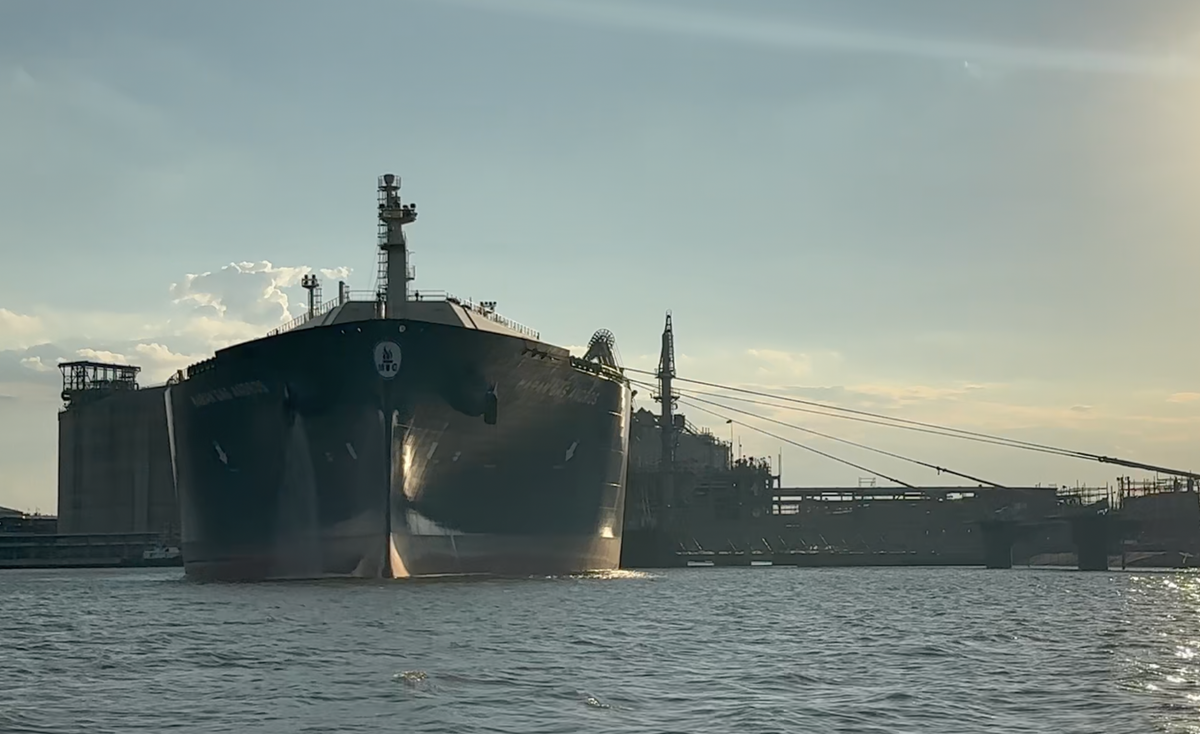
Imagine you wanted to buy a new car. Now imagine that you have a choice of two cars that are identical except one of the cars requires you to buy expensive fuel to run it and the other runs on free fuel. It’s pretty easy to see how the majority of people would choose the car with free fuel. Now, take a look at this.
Matt Price runs Investors for Paris Compliance, which recently released the report The LNG Casino about the huge risks Canada is taking by continuing to invest in LNG exports in 2026 (Full disclosure: I reviewed that report prior to publication). So instead of my example for cars, the above graph is for power generation. And by 2030 you will be able to build a solar plus battery storage power plant for the same price as a natural gas generation plant. As Matt Price explains succinctly, given the two options, no one will choose to build the plant that requires the expensive fuel option when free fuel option is the same price.
It’s easy to see why in 2020 people were still saying that natural gas (methane) had a bright future as a fuel IF they didn’t bother to understand what was happening with solar and storage. I’ve argued for years that one thing that will hasten the energy transition is the combination of ignorance and arrogance that is a hallmark of the oil and gas industry. They were calling renewables a hoax this whole time. Oops.
Meanwhile, in 2019, if you did a little reading and some math you could see where we were headed. The only question at the time was how fast we would get here. I didn’t expect it to happen this fast.
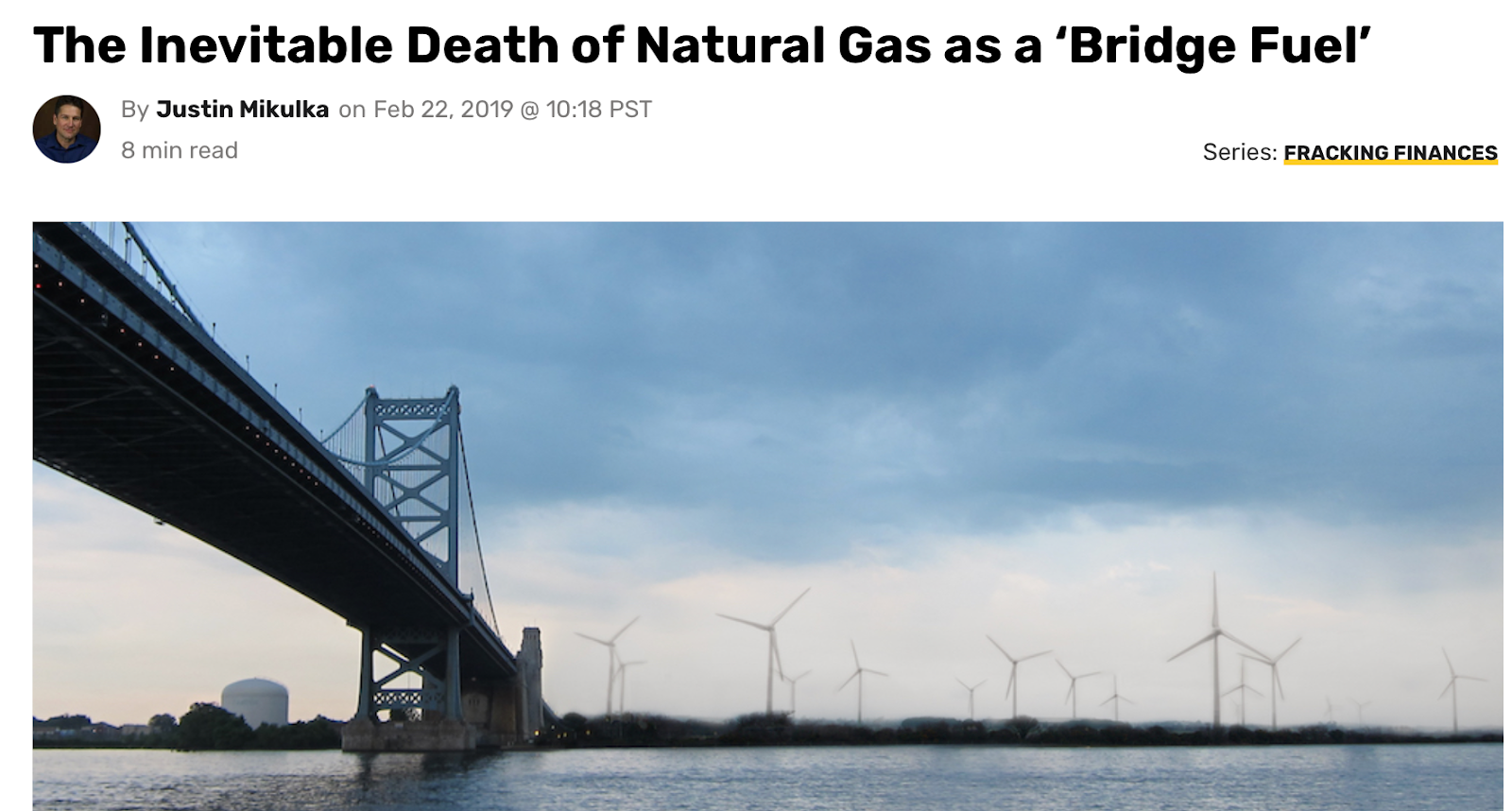
In that 2019 piece I wrote the following.
“When it comes to the long-term economics of power generation, it isn’t a fair fight. There is no clear way natural gas can compete with renewables on an economic basis in the coming decades. Which is why the oil and gas industry works so hard to convince people gas is clean and cheap.
It knows it can’t win a fair fight.”
In the piece I highlighted how clean power was beating out gas in California. Again, I did not expect the transition would be so fast. Natural gas is currently quite cheap in California. So are they using a lot more? No. Why? Because demand is cratering as solar and storage take over. From Natural Gas Intelligence this week.
“In February, for example, solar generation in the California Independent System Operator footprint reached a peak of nearly 20,000 MW, up about 10% year/year.
Natural gas generation, meanwhile, hit a high of only 14,500 MW in February, down 18% year/year.”
California is the fourth largest economy in the world. Its natural gas generation was down 18% year over year in February. Remember how I wrote in 2019 that the gas industry knows it can’t win a fair fight so must rely on propaganda? Expect even more of that now. The Economist is doing its part with this March 2026 headline.
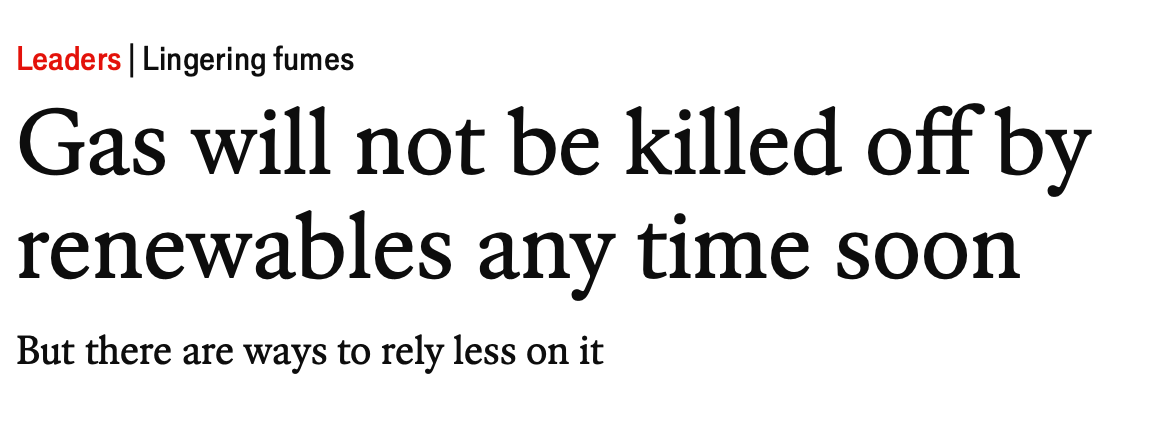
I suggest the big minds at the Economist should do the simple math. Here is some more from Australia this week.
"But gas-fired power generation is the biggest change. Last year, AEMO forecast gas demand for electricity would climb 60%. Now they're seeing a 9% decline. That's 110 PJ disappeared from the forecast. Again, AEMO is clear on the reason why: we will need vastly less gas than we thought a year ago because batteries have completely changed the game."
Do the math.
Trump’s War on LNG
Trump hates wind. And the U.S. government agreed to pay Total energies $1 billion to cancel their U.S. wind project and instead invest in U.S. LNG exports. The timing is really perfect to show how Trump is, intentionally or via stupidity, voluntarily damaging the future of the country. His motivation doesn’t really matter, the damage is real either way.
However, thanks to the latest US/Israel war, the LNG industry had a really bad week. No billion dollar bribes were necessary to cancel LNG deals. And, unlike at any time in the past, there seems to be a collective acknowledgement that relying on imported LNG is bad for your country’s economics and energy security.
Ed Ballard at the Wall Street Journal wrote an article acknowledging how the times they are a changin’.
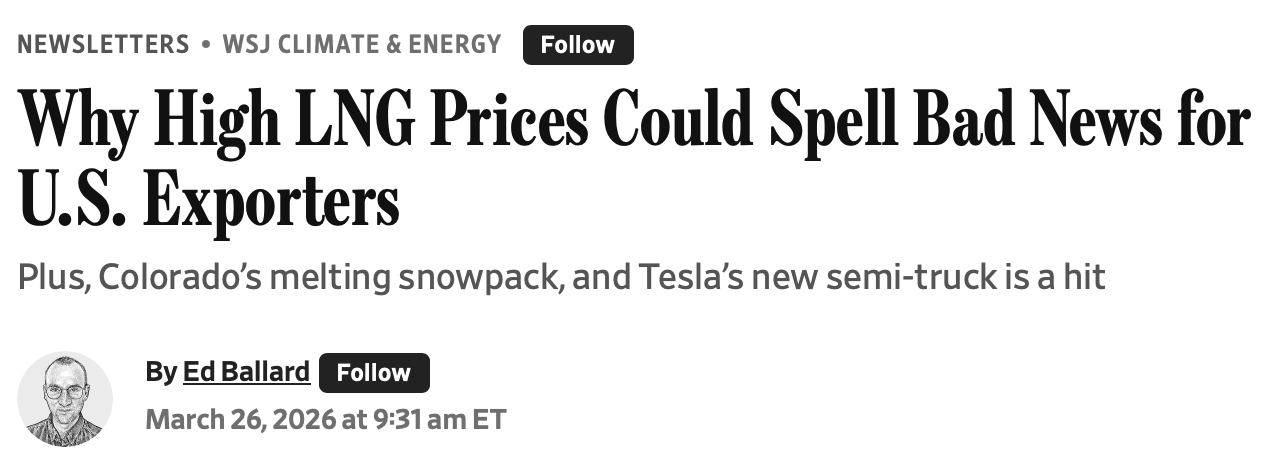
The money quote, “current high prices are already boosting the appeal of alternatives, from renewables to coal.” The math is getting very simple. He also included a quote from an LNG exec.
'It’s a scary thing, it’s not good for our industry,' said Michael Smith, chief executive of Freeport LNG, an exporter
CNBC joined in with this piece.
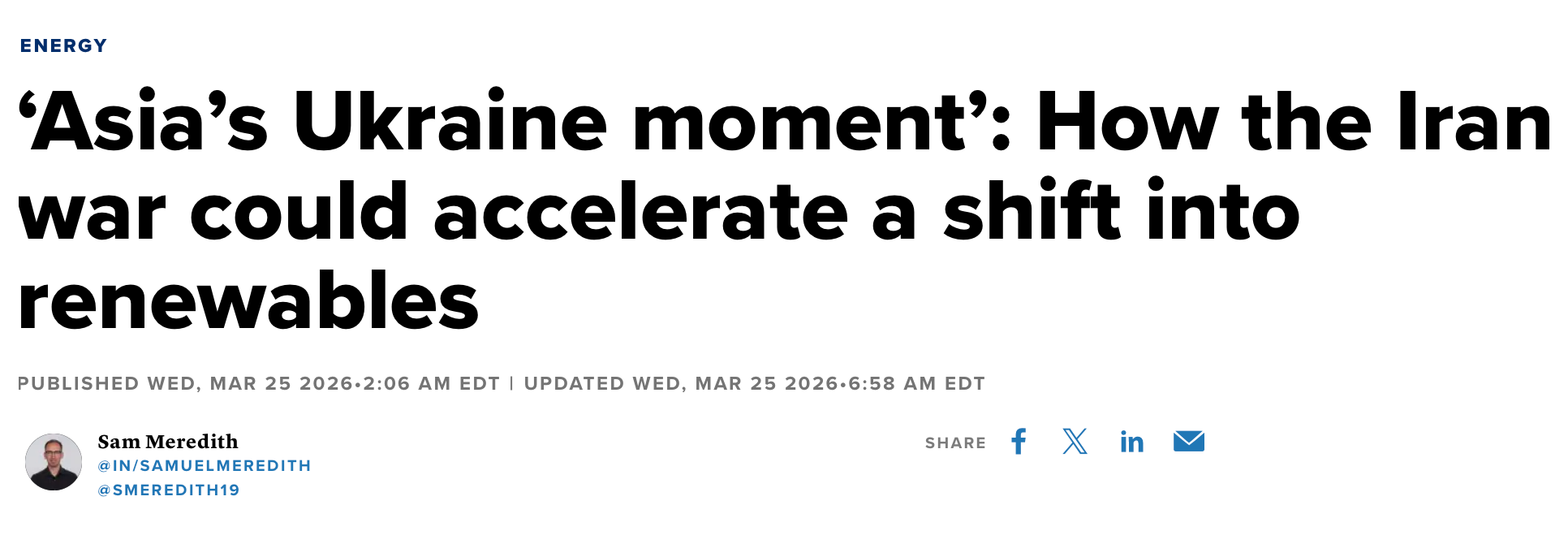
“Renewables and its associated technologies are now commonly perceived as an energy security tool, no longer only a way to combat pollution and climate change, but a geopolitical asset supported by pragmatism rather than idealism,” Escribano told CNBC by email.
“Even among governments and citizens with little concern for environmental issues,” he added.
David Fickling at Bloomberg wrote an article with the headline, “The LNG Shock Isn’t Driving Asia Back to Coal.”
“With the LNG drought pushing up electricity prices and photovoltaics providing a cheaper, easier alternative, a boom in rooftop solar is far more likely than a return to coal. Don’t look under the ground for the solution to the LNG crisis. The answer is in the skies.”

To see that sort of consensus in the pages of the WSJ, Bloomberg, CNBC and S&P Global means things have changed.
The Real World Responds
What should be clear by now is the economics of imported LNG will doom its future as an integral part of the global energy system. Throw in the new energy security issues being amplified by Trump and the other crazed authoritarians supporting him and it’s pretty easy to see how this plays out. This week we learned this:
“Vingroup has told Vietnam's government it wants to ditch a plan to build the country's largest LNG-fired power plant and embark on a renewable energy project instead, as the Iran war has boosted the risk of the fuel becoming too expensive, a document showed.”
Too expensive.
Last June we got this headline, “JERA secures 20-year US LNG deals worth $200b to American economy.” One of those 20 year US LNG deals was with Commonwealth LNG which is a project under development that needs long-term deals to get financing. Not even a year later and we get this headline.
Jera’s US Purchase Deal With Commonwealth LNG Terminated
Last year I wrote about how major US natural gas (methane) producer EQT had agreed to buy LNG from the Texas LNG project which I pointed out wasn’t a great sign for the industry. When the supplier of a product is also the buyer of the product it is unlikely a solid business model. Seems like EQT did some math! From Natural Gas Intelligence where they explain EQT is cutting its commitment by 75%..
“EQT Corp. has amended its agreement with Glenfarne Group LLC’s Texas LNG to buy only 0.5 Mt/y of the super-chilled fuel.
EQT signed an agreement last year to buy 2 Mt/y from the proposed facility, which has not yet been sanctioned. Glenfarne subsidiary Glenfarne Global Commodities LLC (GGC) said Wednesday it has reached an agreement to lift the other 1.5 Mt/y that EQT was supposed to purchase. Texas LNG remains fully subscribed after the changes.”
However, see how they say it remains “fully subscribed” even though Glenfarne is buying its own LNG? So now instead of the natural gas supplier buying liquid natural gas (EQT) we now have the LNG producer buying LNG. Again, this is not a recipe for long-term business success.
The Simple Math
China and India have been the two markets the LNG industry told us would drive big LNG demand growth through 2050. But they won’t. Check out this bit here and remember that LNG is far more expensive than coal. This is comparing the economics of the energy transition and why it will be so much easier for India to do what China has done already.
“When China crossed 1,500 kWh of electricity consumption per person, coal was 10 times cheaper than solar. Today, as India reaches the same threshold, solar plus storage costs half as much as new coal.”
The Chinese built for the world that was coming and it paid off bigly. Apparently they don't make all their decisions on the next quarterly numbers for Wall Street. Now they are reaping the benefits. India can follow that path knowing that these investments pay off TODAY, not at some point in the future.
The New York Times ran an article with the headline, “Why the Iran War May Force Countries to Rely Less on Natural Gas” which had an executive from Glenfarne (the company that just bought more of its own LNG because EQT backed out), pose the following question.
“Everyone will ask questions,” said Brendan Duval, chief executive of Glenfarne, which is developing natural-gas export terminals in the United States. “Like if you’re in India,” he said, “they’re very price sensitive, so are they going to go, ‘All right, let’s not get too exposed to L.N.G. because this could happen every three years?’”
Are they going to go in that direction? Brendan poses the question. The answer is, as you know, yes. I explained that last year and there is a lot more evidence now.
In related news, this Economic Times article shows how India understands that electrification to replace gas is The Way.
New Delhi: The government on Friday held discussions on measures to encourage companies to ramp up production of induction heaters and compatible utensils amid rising demand for these products due to concerns over LPG availability following the West Asia crisis, an official said.
As far as China, it should be obvious to everyone by now.
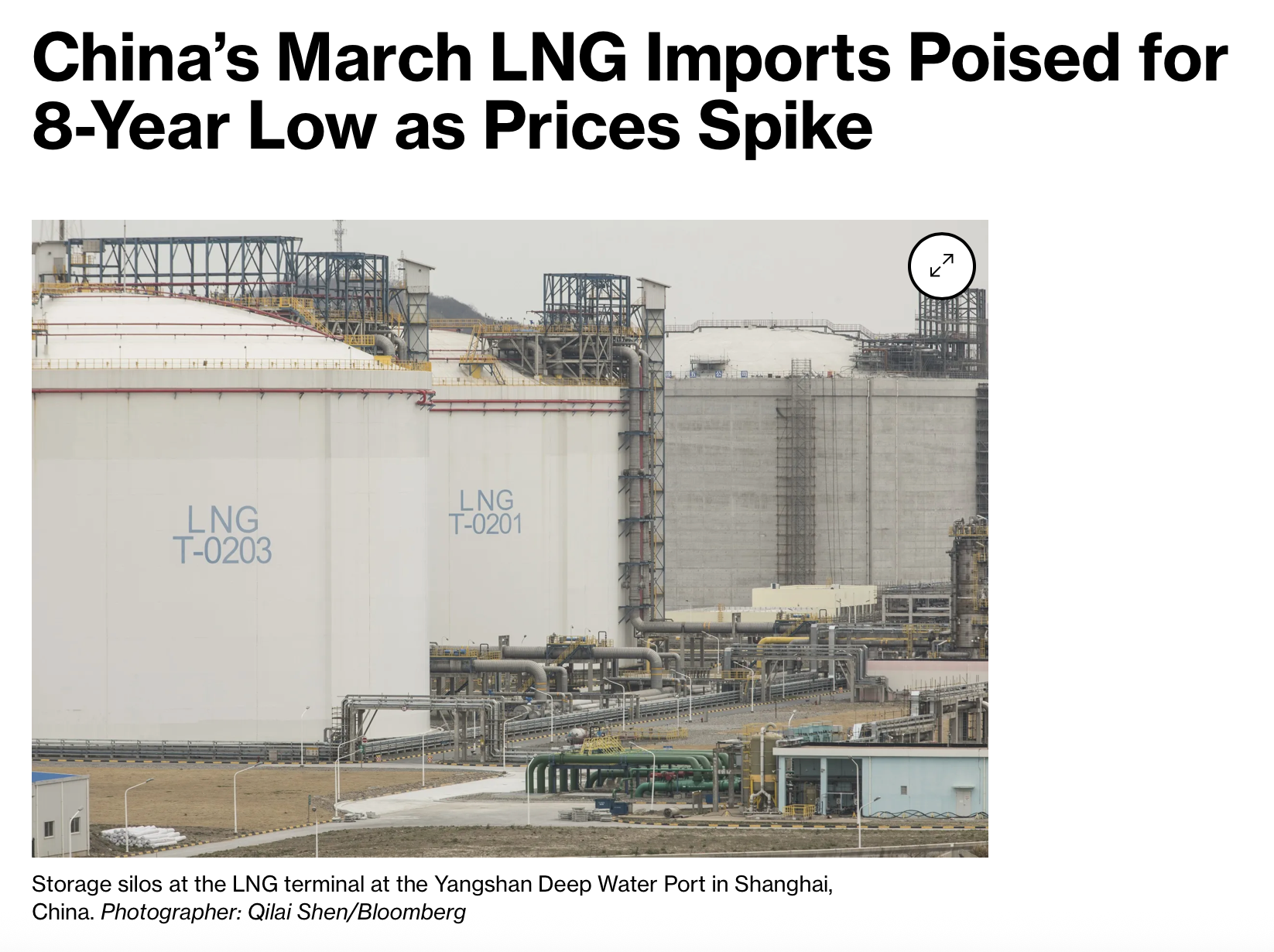
LNG is Liquid Methane
The science is quite clear that reducing methane emissions from fossil fuel production is our best way to slow rapid warming. What continues to amaze me is that the fossil fuel propaganda machine is so powerful they have convinced the world that the thing that is the worst for the climate is actually a way to reduce climate harms.
A year ago I wrote a piece called “Methane Insanity” which pointed out this bizarre situation and commented on the economics and concluded with a section titled, “Paying Extra for Extinction.” This week a new article was published in multiple publications that covered the attempts to greenwash the LNG methane emissions problem by using “certification” techniques. It’s worth a read (full disclosure: I work for Oilfield Witness and our work is cited in this piece). You can read it at The Guardian but longer versions with more info and media are available at Gas Outlook and Drilled media.
Read the article. Draw your own conclusions. What is clear is that LNG will always contribute to more climate change, not less. However, we all know that this reality has not stopped plans for a big expansion of LNG. What is stopping that is the economic realities. The world has changed. The fossil fuel industry didn’t see it coming and they will pay an economic price for that. However, most of the people trying to stop fossil fuel expansion and limit its damage also don’t seem to have seen it coming. Or realize the world has changed. Most of the large “green” non-profits in the U.S. and Europe continue to advocate for working with the oil and gas industry to make it “cleaner.” Why? Is it the big piles of money they get from the likes of Jeff Bezos? Seems like one reasonable explanation. Careerism is rampant everywhere, non-profit world included.
It’s 2026. If you are trying to work with the oil and gas industry to say that LNG is better than coal from an emissions standpoint, you are doing the work of the oil and gas industry for them. Why? I made this point earlier this week.
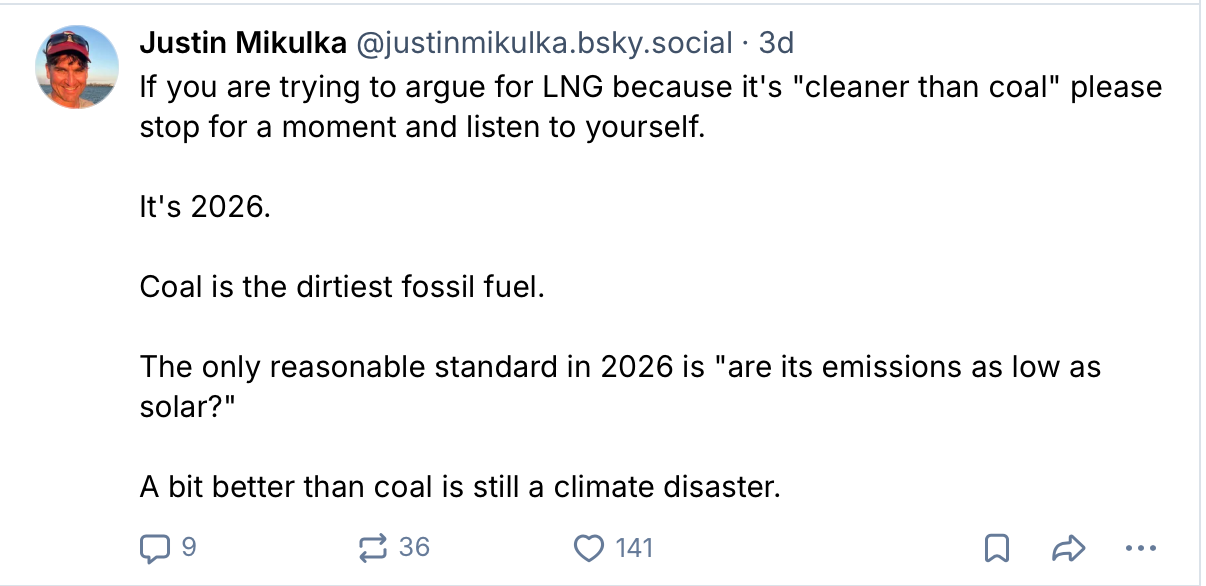
The only honest argument for anyone who cares about climate is “no new fossil fuel infrastructure and rapidly phasing out current uses.”
Lucky for us, even though that is not the message coming from most of the large “climate” non-profits, it is the only smart economic choice in 2026, which gives us a fighting chance. We need it. Even CNN is running headlines admitting the record breaking heat we are all experiencing is, in fact, climate change.

The age of denial seems to be coming to an end. It's hard to tell people that the climate isn't changing when it's so very obvious it is. This wasn't the case when Al Gore warned us. It wasn't the case when Carl Sagan warned us. It is now. So, much like telling people there is no inflation when they have to buy stuff that makes it very apparent there is inflation, this argument no longer works.
Unless we want it to get a lot hotter, we need to stop producing and using fossil fuels. The incredibly good news is that we have the technology to do that and it's actually cheaper. Win-win.
Comments ()