The Donroe Disaster
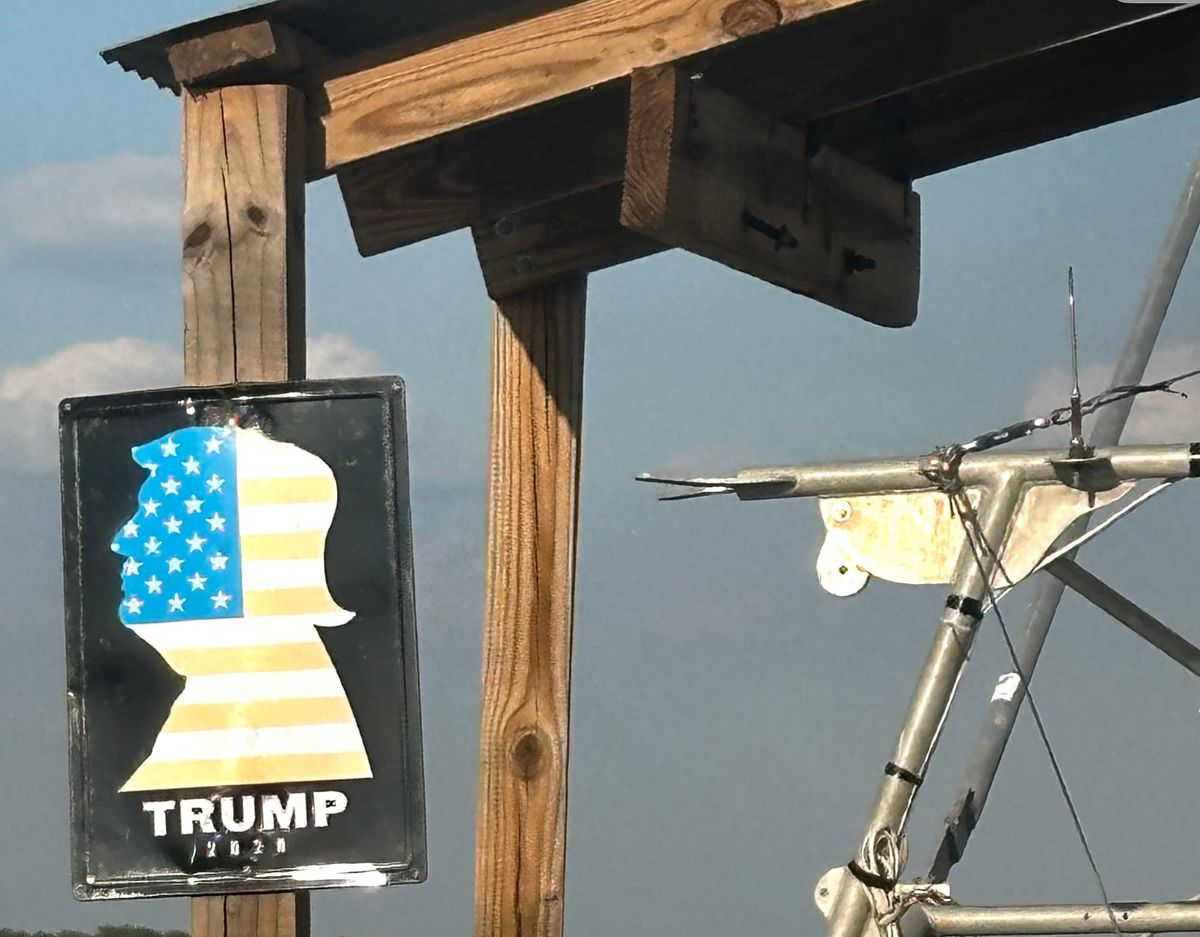
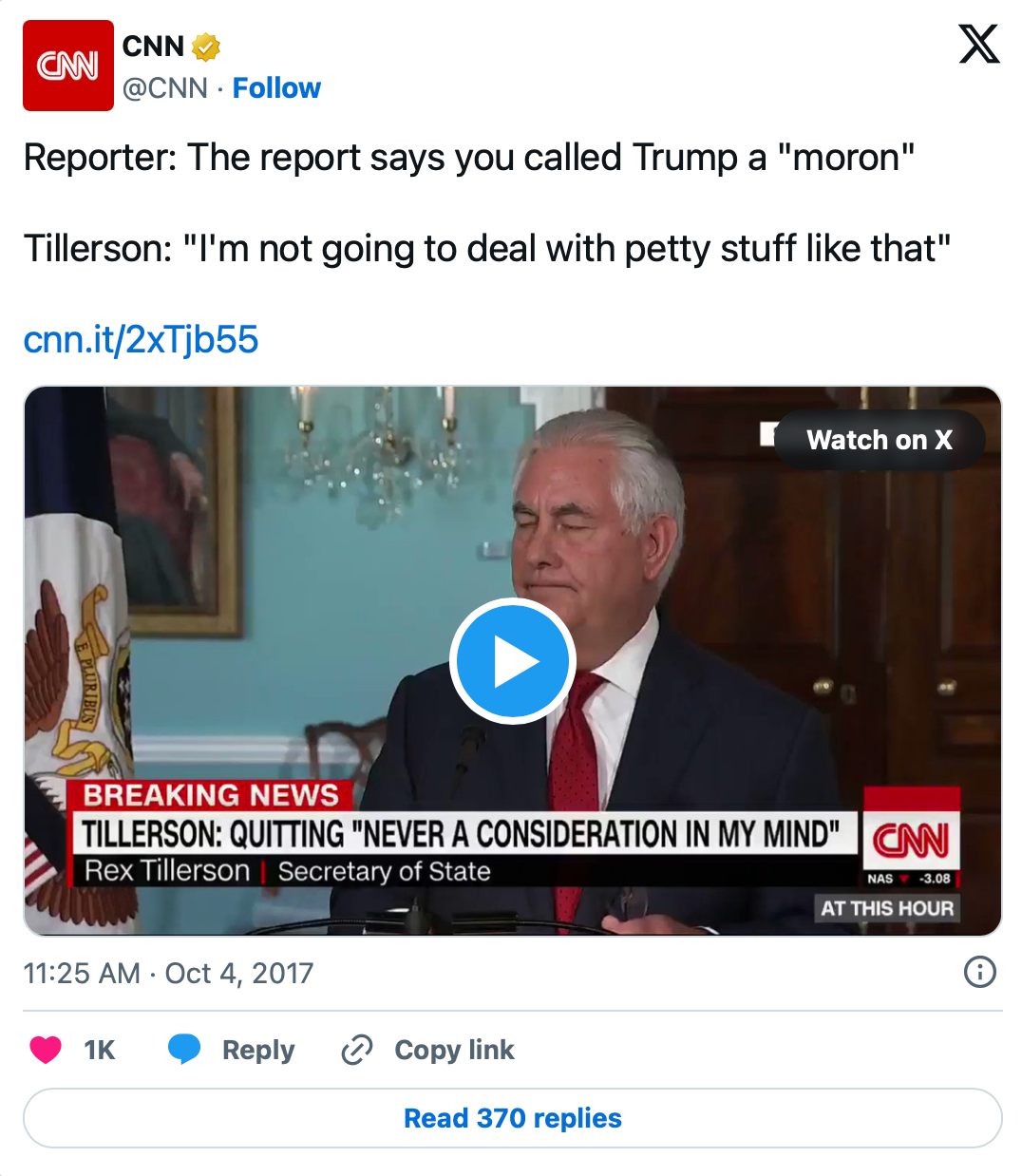
In 2017, former Exxon CEO and Secretary of Energy Rex Tillerson called President Donald Trump a fucking moron. Now it is unusual for me to find common ground with an Exxon CEO about much, but on this we agree.
Now, I’ve found no common ground with Rex’s replacement Darren Woods in the past. I’ve written about Exxon’s fraud issues for over promising Permian production to investors and their ongoing delusional overpromising of Permian production to investors. No common ground until now, that is. Venezuela’s oil reserves are “uninvestable” according to Darren. On this, we agree. Even the optimists say that it would take big piles of money to add another one million barrels per day of production of Venezuelan heavy crude to the global markets and even that would take a decade.
Various estimates put the price of extraction and production of that crude above current oil prices with this oilprice.com article saying the breakeven costs is $80. That price is a real problem but really this does not matter in the global oil markets. One million barrels per day is a rounding error in the global oil markets today. In 2036 it will be a liability as world oil demand will be in decline and prices remain low.
In 2025, China bought one million barrels of oil a day just to put in storage. Because they can. They plan to do the same until they fill up their storage. That may happen this year. More likely in 2027 according to the EIA’s latest estimate. When it does the world will have an extra million barrels per day of oil on the global markets. No investment needed. The Venezuelan oil is uninvestable for many reasons. This will become apparent in the next decade. Is there an argument to be made that this is really about protecting Exxon’s investment in Guyanese oilfields that Venezuela was potentially going to try to tap? Yes and Drilled does a good job of laying out that argument and the facts here. Can anyone think of other ways to resolve that issue that doesn’t involve taking over Venezuela? All of those U.S. military ships parked off the coast of that part of the world probably could have done that without Trump claiming he is the acting president of Venezuela. One of the main jobs of the U.S. Navy is protecting oil company interests around the world so it’s not a new idea.
Several people have argued that the reason for the Venezuelan take over was because it helps support the petrodollar system that gives America so much power. While I’m not an expert in this area, this seems like a reasonable explanation but I’m not confident the fucking moron and his team of ultra-wealthy economic advisors who seem to think they can lie to people about how much their groceries cost think on that level. I’d place my money on it being that Trump got pissed off that Maduro kept dancing in response to his threats.
That said, you know what threatens the petrodollar system? Renewable power, energy storage and electric vehicles. Expect to be hearing more about this in the coming years. Whatever the reason for Trump's illegal moves, Venezuelan oil is unlikely to have any impact on global oil markets for at least a decade. And in a decade global oil markets are going to look very different than they do today. Darren at Exxon doesn’t say this in public, but he knows.
The Climate Doesn’t Care
While the world is distracted by the rise of extreme wealth disparity and fascism, the climate crisis is no longer getting as much attention. We are being told by many famous people with little energy expertise that we should no longer worry about the climate crisis and stop picking on fossil fuels. Fucking morons.
It was interesting to see some people acknowledge that Venezuela oil production produces a lot of methane emissions and point out that might limit production. Supposedly Venezuela is emitting a similar amount of methane to what was coming out of the Bakken fields in North Dakota in the early years of the boom. Roughly 25%. Interestingly no one seemed to care about that when it was U.S. production.
The Bakken is not emitting as much now but the boom is in the past, as I recently explained. Since I wrote that piece, Harold Hamm said that his company, the largest in the Bakken, will no longer drill new wells there because they can’t make money. All those years we were told they could make money at much lower prices. They were lying. So, in addition to planet-killing methane emissions at obscene levels, the Bakken and Venezuela also share another thing in common these days: uninvestable.
I will be writing more about the U.S. oil and gas industry in the near future but it’s all downhill from here as far as production volumes and don't expect many profits for the next couple of years.
The Coming US Natural Gas Price Crisis
The U.S. (and Mexico) are going to be facing much higher natural gas prices in the future. I’ve talked about this previously and explained the reasons but some recent news made me think it will be more severe in the next few years than I was expecting.
As we know, the U.S. plans to greatly expand its natural gas (methane) exports in the form of Liquefied Natural Gas (LNG) over the next five years. There also is talk of using more gas for powering data centers but that demand is more theoretical until someone starts magically producing gas turbines for power plants in the next five years. However, those datacenters planning to run operations on gas power are in for a price shock just like the rest of America, so perhaps more of them will explore solar and wind plus storage.
Here is what the Energy Information Administration (EIA) says about the current supply/demand situation for the U.S. natural gas market.
“We expect the spot price of natural gas at Henry Hub to average just under $3.50 per million British thermal units (MMBtu) in 2026, down 2% from 2025, and average $4.60/MMBtu in 2027. Natural gas prices increase in our forecast because growth in demand—led by expanding liquefied natural gas exports and more natural gas consumption in the electric power sector—will outpace production growth.”
Demand will outpace growth. And yet the LNG export terminals will need a lot more gas to fulfill the existing contracts in place over the next five years. Where will this come from? Most of it is expected to be from the Permian as associated gas from oil production or from the Haynesville from gas wells.
Natural Gas Intelligence (paywall) addressed this issue this week which included this quote.
“If shale oil gets shut in over the next six months with prices below about the $62/bbl level, we could see marginal associated gas go away in the second half”
The EIA expects Permian oil production to decline in 2026. It is already declining in the Texas Permian and just being propped up by the last mad dash in New Mexico. As the quote above notes, this means less associated gas.
Mike Shellman at Oilystuff.com is required reading for anyone interested in understanding the future of U.S. oil and gas production. Here is a recent comment of his on associated gas in the Texas Permian.
“Please stay with me about this associated gas issue in the Permian, particularly in the Delaware Basin...it ain't what it's advertised as, I don't think. Higher product prices can fix a lot of things, but not all of 'em.”
Mike goes through the details on his site and I recommend reading them. I’ll share another quote of his.
“If this is the area (containing three high GOR benches*) that is being counted on for AI feedstock and/or $72 B of proposed LNG facilities... hoochy mama. Not me, brother”
*Note: high GOR benches refers to areas with high "gas to oil ratios" meaning they have a higher percentage of gas. Mike really doesn't think associated gas will be meeting LNG demands. I agree.
Mike also points out something that a lot of people are going to learn the hard way which I like to call the “Speed of Shale.” Shale wells which are producing the vast majority of oil and gas in the U.S. right now decline much faster than traditional oil and gas wells. Mike says these Permian gas wells will produce for around 12 years. Many LNG contracts are for 20. It’s this sort of simple math people don’t seem to want to acknowledge.
How about the Haynesville? RBN Energy is an oil industry publication but I’ve found they tend to stick to reality more than other trade publications. They released some Haynesville analysis last week and it opened with this bit that might be news to many where it notes that gas producers in the Haynesville were “historically thwarted by geological conditions and poor drilling economics.” RBN lists the many challenges in the Haynesville and then notes if all goes well it could add another 0.6 Bcf/d by 2035. RBN also notes that the LNG export industry will need another 20 Bcf/d by 2030. So the Haynesville’s best case scenario is a rounding error in this discussion. And, as I have explained, it will require prices that make it very difficult to then sell that gas for a profit as LNG. I’ve been saying that the LNG Pause was a real thing. Not because of Biden’s nonsense but due to good old fashioned economics. It is here. But even if no new LNG terminals are built, the U.S. is headed for a domestic gas crisis. This will raise electricity prices and heating prices. Smart industries will begin building their own renewable plus storage to avoid this. Just like they are in Pakistan and in South Africa and around the world. Either way, the policies in place put the interests of foreign companies and traders over those of the American public. The people won’t be happy.
Foreign Owners of U.S. Gas Assets
While Trump and his crew are busy grabbing uninvestable assets in Venezuela, guess who is worried about the U.S. gas shortage and buying up assets here? Japanese companies. They are buying up a lot of the Haynesville including another $7.5 billion purchase last week. I don’t think it will go well for them for the above reasons but they want to protect their ability to export U.S. gas to foreign markets. Qatar is also a major supplier on the global LNG market and they have much lower production costs than the U.S. Even so, they own half of Exxon’s Golden Pass LNG export facility in Texas that is just starting up. Imagine letting your main competitor buy into your market. Not that bright. However, the Qataris gave Trump a plane so they have paid their bribes and thus get a place in line in front of the American public. The Saudis are dropping money trying to buy into more US LNG projects and potentially take over the most recent failed LNG project by Energy Transfer. Making America great by selling off its natural resources to other countries.
How will Americans feel about this when domestic gas prices are double what they are now? Triple? It will be interesting.
There is much left to unpack in all of this. Mexico is in a bad spot. They are heavily reliant on U.S. gas and they will pay the higher prices just like the Americans. They should be building renewables as fast as possible but President Sheinbaum is talking up the future potential for Mexican LNG exports of Permian gas (reported this week behind paywall). Where you gonna get that gas, Madam President? Might want to look into that.
Do Canadians still think it was a bad idea to cancel the KXL pipeline? Canada has its own problems and also is finding out that the LNG koolaid they drank was the culty kind that kills. Shell wants out of a big Canadian LNG investment. Shell has been the world’s biggest LNG mythologist with forecasts of massive LNG demand increases through 2050 so this move should spook people who aren’t total fucking morons. However, Canadians might be able to sell pipeline gas to the U.S. in the future when the U.S. shortage hits.
In the past few years the Europeans made great efforts to get off of Putin’s gas and switch to Putin’s good buddy’s gas. Now they need to get off gas if they don’t like it to be from a supplier who is actively trying to destroy them. Several people are now pointing this out including IEEFA and European Politico that point out that the EU is simply swapping one “high risk geopolitical dependency” for another.
All of this must be quite amusing to the Chinese. Even the New York Times is letting the truth be printed these days.
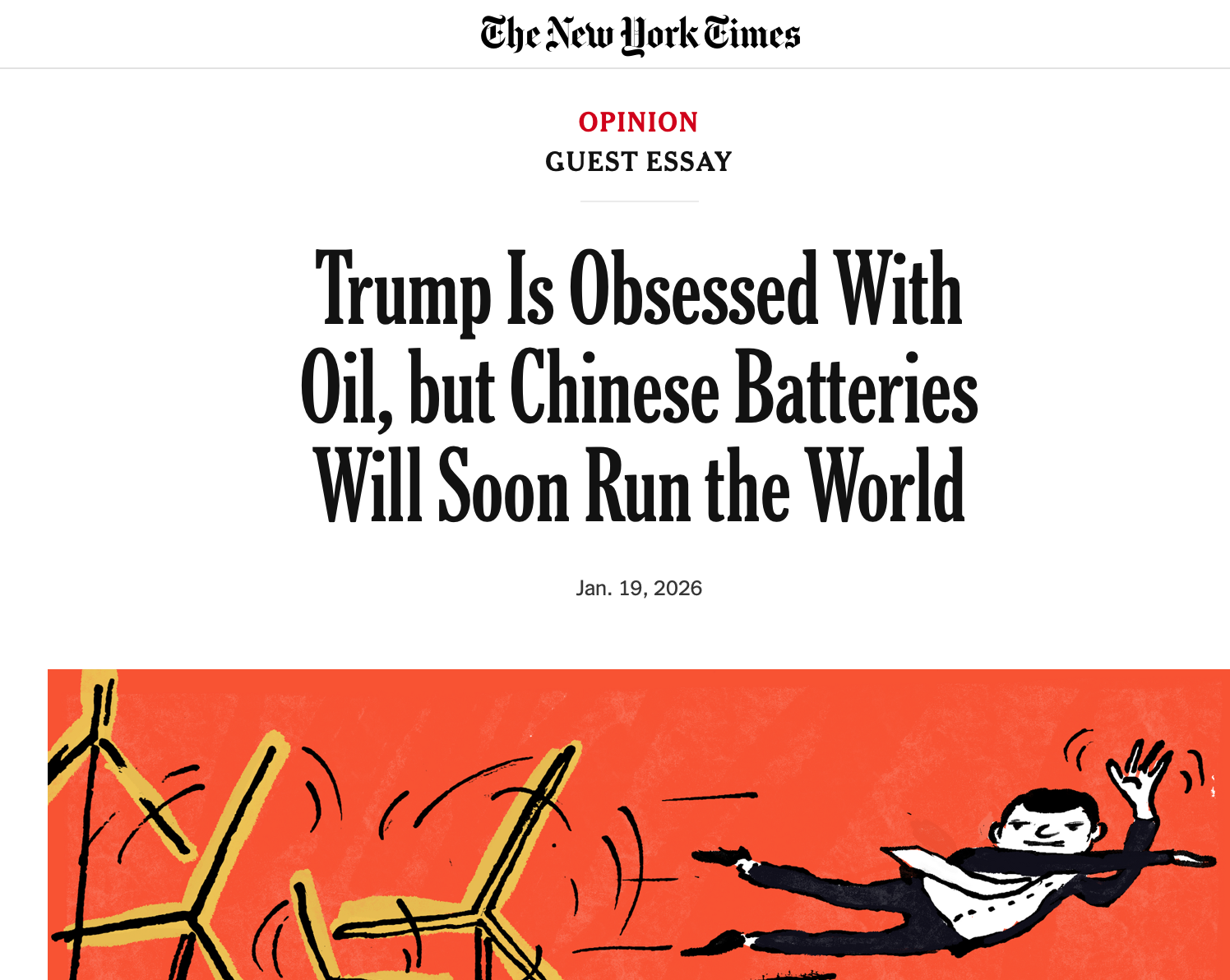
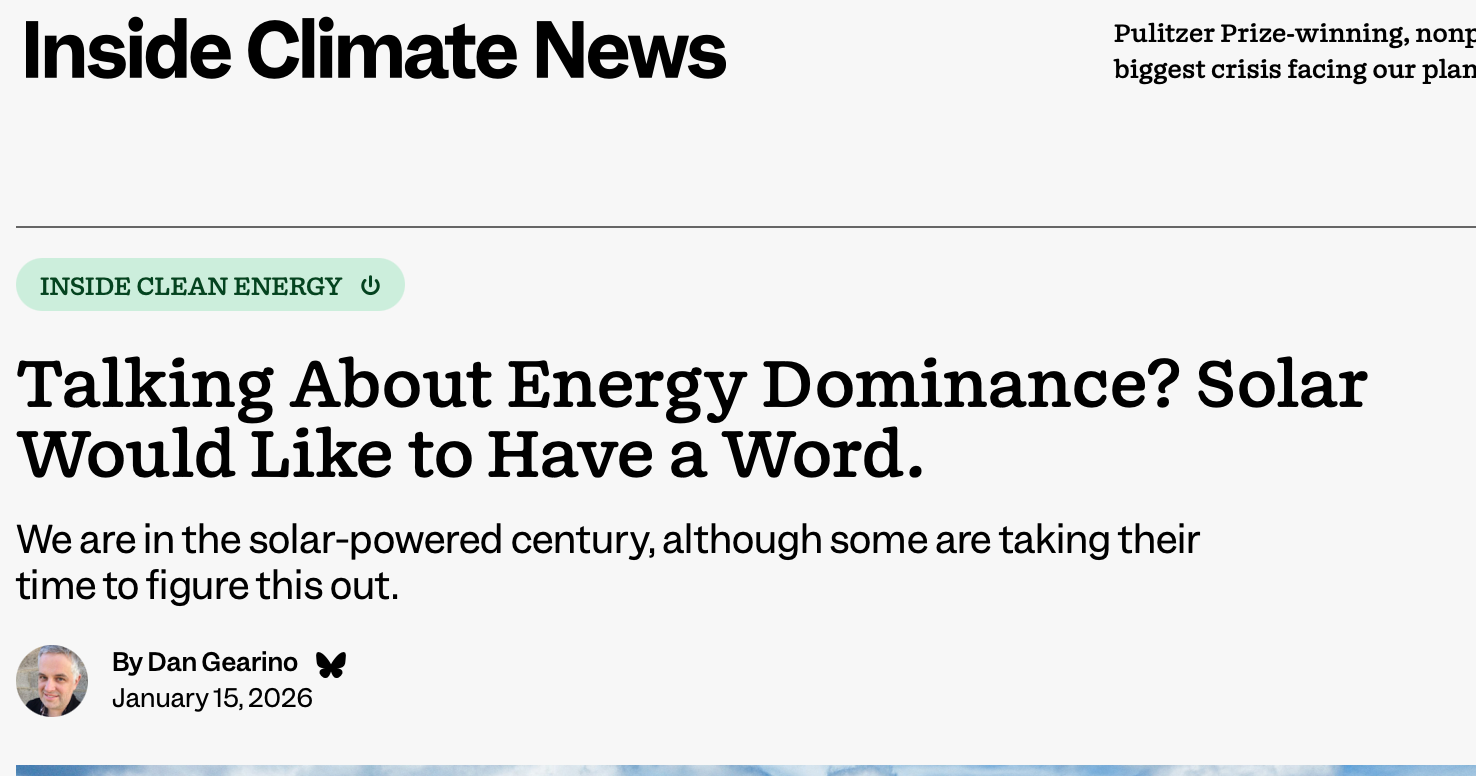
That article came out yesterday. This one came out last week.
One last point to make. Imagine you take over another country and declare yourself the new ruler and say there will be no elections. This is not an easy thing to pull off. So what do you do? Say you are acting president on Wikipedia and then threaten to take over several more countries and start a war with Europe. Can you start to see why Rex said what he did?
I have plans to write about U.S. oil and gas in more detail, LNG markets, large “green NGOs” working with the oil industry to extend fossil fuel use, datacenters, Mexico, China and will try to increase my publishing frequency as everything moves fast these days.
Thanks to my latest round of new paid subscribers. You all rock.
Peace.
Comments ()