Enhanced Geothermal: Don’t Believe the Hype
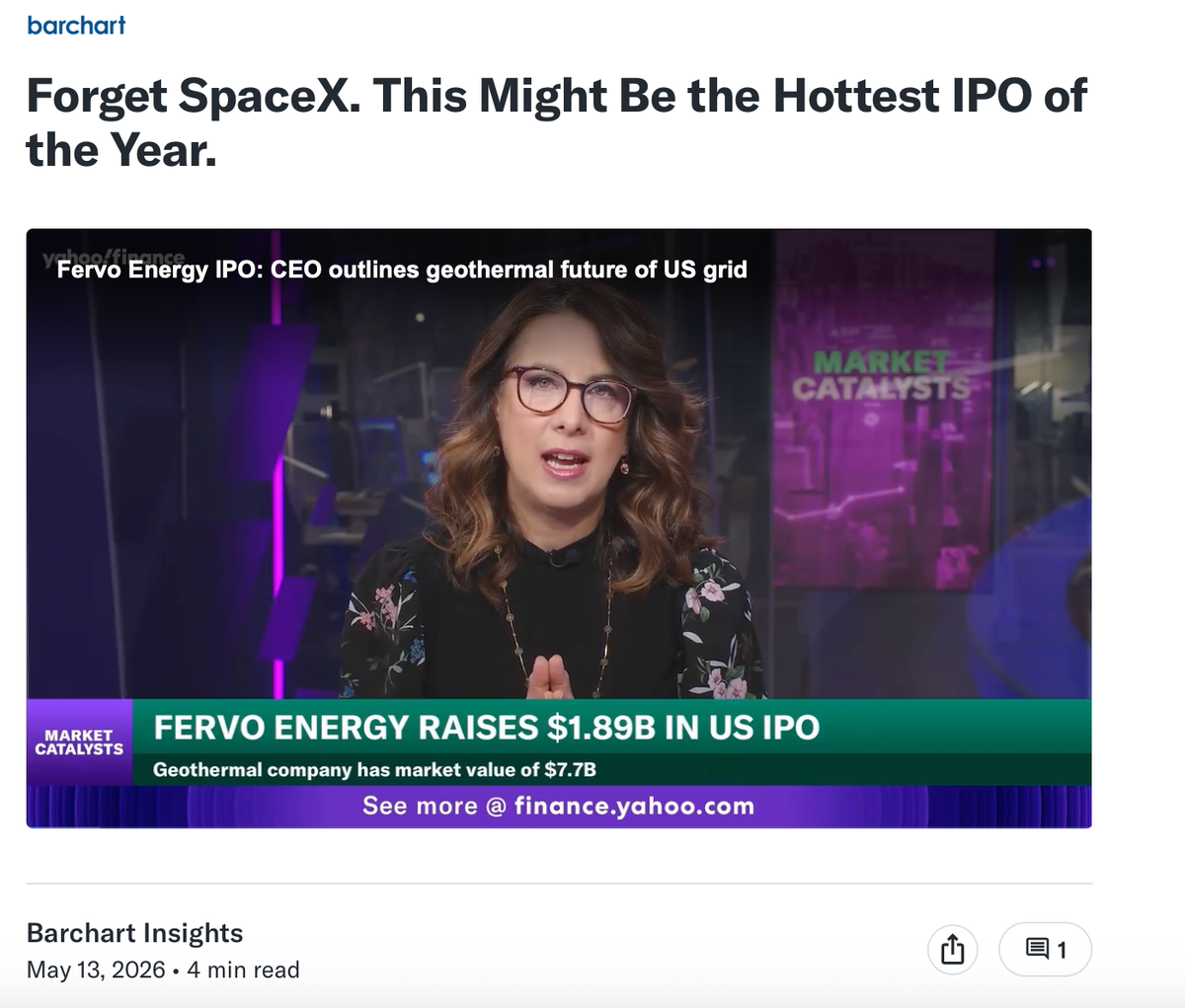
Enhanced geothermal is a hot technology in 2026 and the recent initial public offering (IPO) of enhanced geothermal start-up Fervo is a big reason why. The IPO drove a lot of media attention and hype for the technology with headlines saying, “Forget SpaceX. This might be the hottest IPO of the year.” Along with the IPO, we learned this technology has bi-partisan political support in U.S. politics with AOC leading the charge. The Wall Street Journal gave Rahm Emanuel an op-ed to lecture Democrats on energy policy in which his first recommended technology to invest in is geothermal. What is going on here?
Enhanced geothermal is an unproven technology which even if it achieves its most ambitious goals (which is unlikely) it will still be more expensive than the proven technologies of wind, water, solar and storage which are currently dominating global growth in power production.
So while one would expect any person or organization truly interested in phasing out fossil fuels to be pushing these winning technologies as they are THE SOLUTION to our climate problems, the Fervo IPO was supported by a big push for the technology by many of the major environmental non-profits. While world dominating solar and storage are not supported by the Trump administration, enhanced geothermal has strong support. One company who recently accepted money from the Trump administration to cancel an offshore wind project said they plan to use that money for geothermal and gas plants. Bill Gates is an investor in Fervo. Secretary of Energy Chris Wright was an early investor through his oil services company. As was large shale oil company Devon. Google is an investor and awaiting power from Fervo. The technology is also being supported by several major oil industry-associated think tanks and academic institutions. There are even some very new organizations who have joined what appears to be a well coordinated effort to push enhanced geothermal technology.
What is it about this technology that has united all of the powerful voices in the energy space in a way that no other technology has done? Seems like something worth looking into. So let’s do that.
What is it?
The New York Times recently did a great job of explaining what Fervo does.
“Fervo drills pairs of wells that extend thousands of feet down into hot, dry granite. Then, using controlled explosives and high-pressure fluids, it creates cracks between the wells. Finally, Fervo injects water into one well so that it moves through those cracks, heats up to more than 300 degrees Fahrenheit and comes out the other well as steam that turns turbines to generate electricity.”
So the basic idea is to drill holes into hot rock, pump cold water down to the hot rocks and then bring hot water to the surface where it powers turbines and produces electricity.
Fervo’s IPO
I like to keep energy and economic analysis simple. In power generation we know low-cost wins. And Fervo is in the power generation business. And their power generation is not cheap. Fervo benefitted from a lot of favorable press in the past few years with a recurring theme – Fervo is run by oil company veterans who use drilling techniques from the shale industry. We are told that due to advances in this technology they have greatly reduced the cost to drill these wells. Most of the press coverage has seemed to imply that this meant enhanced geothermal technology was economically competitive. But they never get into the details of how much it will cost to produce the electricity that Fervo will be selling. In an article about Google’s agreement with Fervo it stated, “Google declined to share financial details about its agreement with Fervo or the cost of the electricity that the geothermal facility is producing.”
I’ve spent the past decade looking at similar claims from the shale oil and gas industry. They always talk about how they have new technologies that will improve the economics of their business. They don’t talk about the actual costs to produce a barrel of oil. The real costs are never discussed. And so for years the majority of the press reported that shale oil and gas companies were making money when they were not. Fervo's claims of huge reductions in drilling costs seem reasonable but Fervo isn’t selling wells or getting paid to drill them. They are in the power generation business. So I have asked the question: what will customers pay for Fervo’s electricity? That is what they are ultimately selling. It isn’t a question anyone seems to want to answer. And one prominent clean energy pundit got pretty upset when I asked him. Which is usually a good indication they don’t like the answer and would prefer no one knows. Why would so many people be so excited about a technology that is not economically competitive? I think that is an interesting question.
With the IPO we start to get some answers. This graphic is from Fervo’s IPO documents (S1).
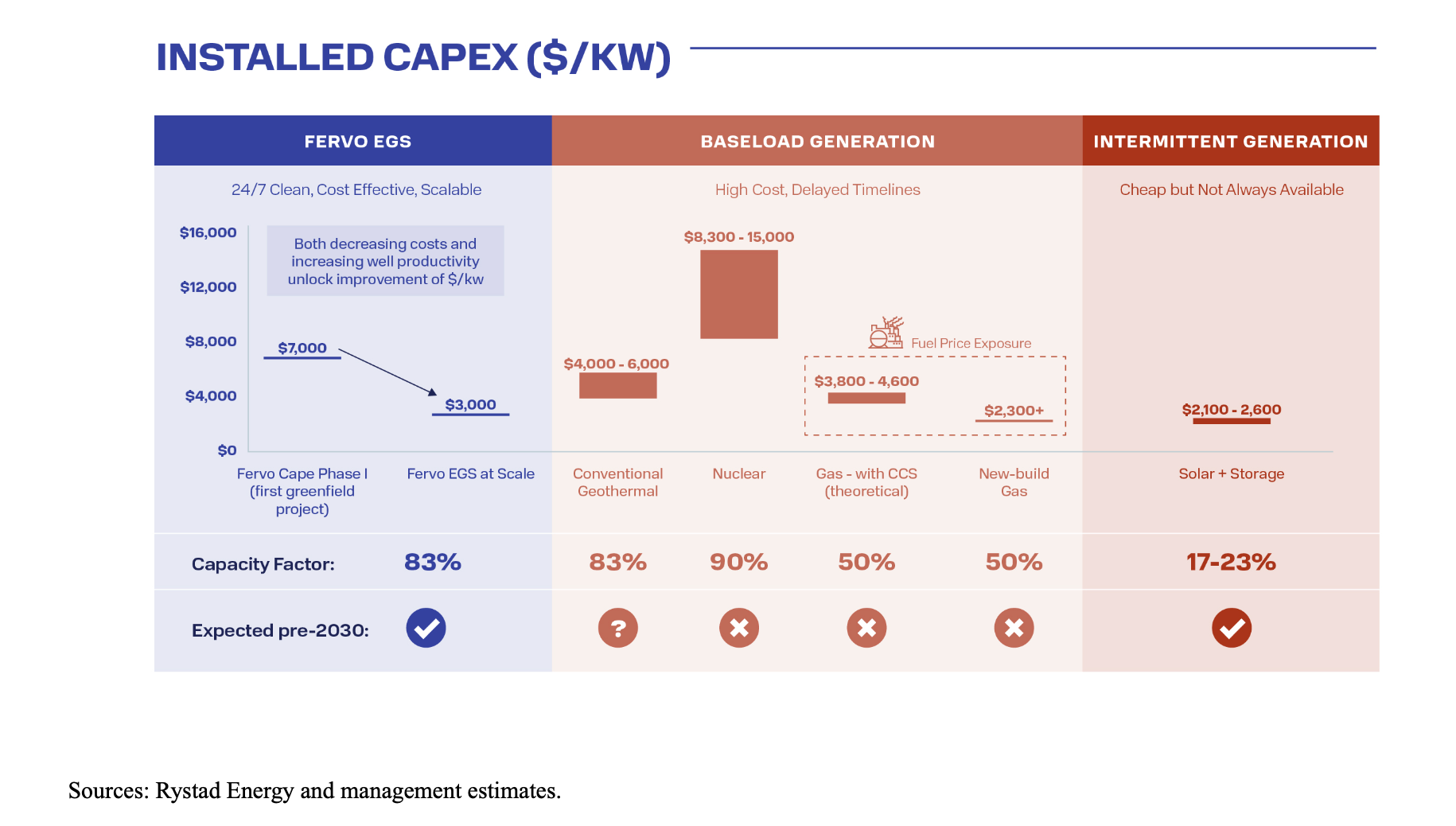
Fervo provides this graphic to potential investors to show how it compares to other power generation technologies. Fervo makes the case that it sees nuclear and gas power as competitors, which it claims have “high cost, delayed timelines.” It also shows “intermittent generation” which is how it refers to solar plus storage which it says is “cheap but not always available.” Fervo describes its own power generation as “24/7 clean, cost effective, scalable.”
Fervo’s current $/KW costs are $7,000.
New build gas is estimated at $2,300+
Solar plus storage is at $2,100-$2,600
Now Fervo claims that if everything goes right in the future they will bring that down to $3,000. So even in their best case scenario they will not be competitive with solar plus storage which is also expected to get much cheaper. And they are a long way from their best case scenario and none of this has been proven at commercial scale. Fervo argues that the advantage it brings is that it will have clean power to replace dirty gas power at a similar cost if they achieve their targets (even thought they will remain more expensive than gas power). The argument against lower cost solar is that solar is intermittent. And that is true for solar. But Fervo’s claim that solar plus storage has a capacity factor of 17-23% is very odd. The EIA says that US solar had a capacity factor of 24.4% in 2025. But that is without storage (aka batteries).
This recent Reuters article on how solar plus storage is replacing new gas power plants notes that “Texas Panhandle wind/solar resource” with “a 60 to 70% capacity factor.” It then mentions using gas to back that up to get to “firm” power. Does it seem odd that Fervo would tell its investors that solar plus storage has at best a 23% capacity factor? Do they not know the real numbers or do they not want their investors to know? Either way, that number in their IPO filing is not accurate. Here are findings from a report that came out around the time of Fervo’s IPO.
“Firm levelized costs of electricity for solar-plus-storage range from $54/MWh to $82/MWh in high-irradiance regions, IRENA said in its new report, “24/7 Renewables: The Economics of Firm Solar and Wind. That compares with $70/MWh to $85/MWh for new coal in China and more than $100/MWh for new gas globally.”
If you are claiming solar plus storage has a capacity factor of 17-23% in the year 2026 you either have no clue what you are talking about or are misleading investors. Neither is good. If anyone can find ONE mention of this fact in all of the investment coverage of the Fervo IPO, I’d love to see it as I have not. Also, I’ve seen nothing from any of the think tanks or academic groups or big “green” environmental groups pushing this technology. I’ve seen no mention anywhere. It’s clear that Fervo is positioning itself against solar plus storage. Why would a company that claims to want to provide clean energy push false claims about solar plus storage? Perhaps the investment by the oil industry and the favoritism from the Trump administration have something to do with this? Here is a statement from Fervo’s S-1 in a section titled “Deficient Supply Alternatives.”
“Variable renewable energy resources (“VREs”) like solar and wind have expanded rapidly but can only meet certain hours of demand, even when coupled with battery storage.”
Do they not know or are they just pushing the fossil fuel propaganda like their oil industry investors and former employers? Either answer should worry investors. If their whole business case is that solar plus storage “can only meet certain hours of demand” and that isn’t true, it would seem they have a business problem.
So, currently Fervo can not compete on economics according to Fervo and the Wall Street Journal. “Power produced by Fervo’s first project won’t be cheap at roughly $7,000 a kilowatt, comparable to some nuclear SMR designs.”
Won’t be cheap is apparently another way to say “the most expensive option in the market.” Even if at some point in the future everything goes right for them they will still not be able to compete with solar plus storage on the economics. Or even gas power. And solar plus storage will be getting cheaper and will be delivering 24/7 power. That is happening now around the world.
Unproven Technology with Big Risks
For Fervo’s plans to reduce their costs, a lot of things have to go right for them at a time when serious questions remain about the viability of the technology to scale and to maintain power over time. This article at GeoExPro points out that Fervo’s technology is not proven at scale, despite what Fervo claims.
“We agree with Fervo’s statement in their S-1 filing that “Project Red was a limited-scope, proof-of-concept initiative designed to demonstrate certain technical capabilities rather than a commercial-scale development”. This is, however, at odds with the headline used to announce the Project Red data release: “Enhanced Geothermal Has Been Proven at Scale”.
We are not at a point where Fervo’s technology is proven. And there are some major potential risks for Fervo that could impact the economics of their power production.
First up is water. Enhanced geothermal requires water to be pumped down one well and then it travels through fractures in the rock, heats up and comes back up the other well. Not all the water makes it back. This should be no surprise to anyone with fracking industry experience as the fracking industry is currently dealing with an unsolvable problem of it blasting high pressure water into the ground and the water not staying where they want it to. This is in large part because they are fracturing all of the rock and giving the water places to go. GeoExPro notes that:
“Fervo also note an average 70% “recapture rate” of the injected water, which means that for a new project, a constant source of make-up water would have to be found, produced, transported, mixed, and re-injected to maintain production.”
In Fervo’s S-1 document Fervo repeatedly mentioned that access to water is a big risk noting the risks of not having:
“continued availability of water supply or costs associated with procurement”
And the risk of:
“Limited access to a stable and secure water supply”
And,
“Climate change could also affect the availability of secure and economical supply of water, which is essential for our ability to secure new water well permits and continue drilling, especially in western states where we have seen severe drought and increased prices for industrial water.”
It isn’t clear how much water they are losing vs recapturing but it is clear that this is a water intensive industry. Proposed for a part of the country that is facing a water crisis while also being proposed to support water-intensive data centers. So, water availability is a real risk, as noted in this 2023 article.
“I think Fervo has done an incredible job of raising money, getting customers, raising awareness, etc.,” Austin Vernon, an engineer who writes extensively on geothermal, told me in an email. “But if you read their paper they were losing 10-20 percent of the fluid they circulated. The cost of that water would be more than the electricity is worth in most wholesale markets.”
That last line seems notable when considering economic viability.
The other big unknown is the issue of decline rates. Now, decline rates are a killer in the shale oil and gas industry. Fracked wells decline much faster than conventional wells. Initially the oil industry predicted that fracked oil wells would decline at similar rates to conventional oil wells. I wrote about how this assumption was one of the ways that the industry greatly overestimated its reserves. The models were proven wrong by the real world results. So, decline rates are a killer in the oil industry. They are so bad they led to the concept of the Red Queen Effect - the wells decline so fast that you have to quickly drill new wells to maintain production. In enhanced geothermal decline rates are about how quickly the temperature of the water coming back up to drive the turbines cools off. GeoProEx and others have raised this issue along with Fervo noting it as well. After watching the shale industry learn hard lessons about what happens when you fracture a bunch of rock and blast water into it I would be concerned that the future of this tech is still quite unknown. What do decline rates look like at scale? We don’t know. Credit to the New York Times for including this quote in its recent Fervo profile.
“One big concern, however, is how quickly geothermal wells might cool off as water is pumped through them. If they cool off after just a few years, companies will need to drill new wells, raising costs.
“I think one of the biggest question marks that the big capital providers are still waiting to see is the decline,” Mr. Haustveit said. “We need to get real field data.”
So we are a few years from having that data. Which is one reason Fervo says this in their IPO filing.
“We believe that we will continue to incur net losses for the next several years and we may not achieve or maintain profitability in the future, either on the timetable we expect or at all.”
The WSJ noted the decline issue as well.
“The big question for Fervo is whether its geothermal wells will generate consistent heat over the life of its 15-year contracts. Fervo’s S-1 filing says its pilot project generated ‘consistent, stable temperature,’ but that project has only been operational since 2023.”
There are other concerns as well. Drilling lots of deep holes in rock and setting off explosions to fracture that rock increases earthquake risk. We certainly learned that from the fracking industry. There is also the risk of normally occurring radioactive materials (NORM). A lot of the water that comes out of fracked oil and gas wells is radioactive when it comes back to the surface.
And one well-acknowledged risk to geothermal is that it can not scale like solar and wind. Why? Because it is dependent on geology. The WSJ pointed that out.
“It only makes economic sense in certain places, primarily the western part of the U.S., where hot rock can be found in shallower surfaces.”
Geological constraints put a real hard limit on the industry.
“In 2023, the National Laboratory of the Rockies estimated that 90 GW of EGS capacity could be economically built across the country by 2050.”
To put that in perspective, here is the new power generation in the US for 2026.
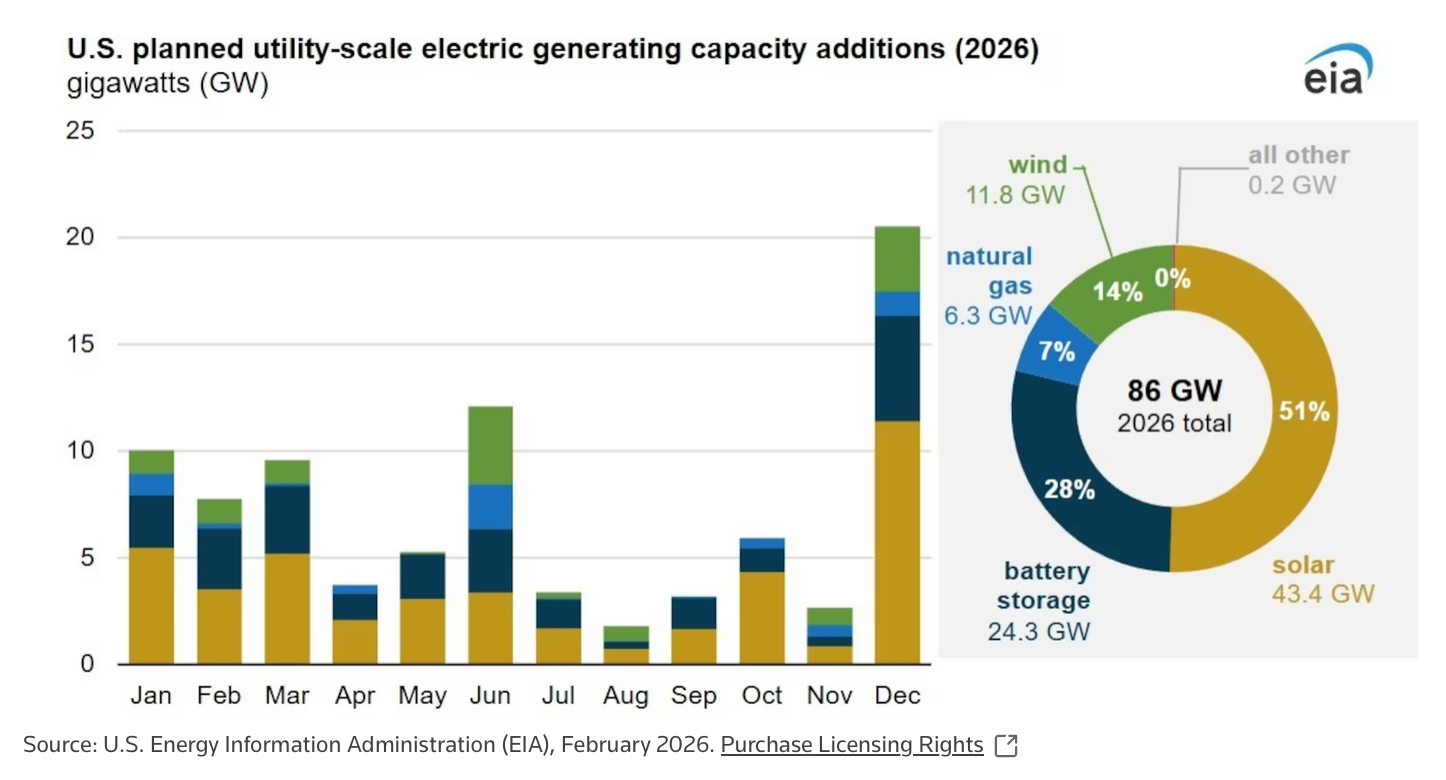
A total of 90 gigawatts (roughly 4 GW a year) of expensive power generation by 2050 is the best case scenario. This is a rounding error in our efforts to address climate change.
The geological constraints of EGS also lead to dependence on transmission which could limit the technology’s potential or increase its cost. You have to go where the good hot rocks are and those may not be by transmission lines.
Why is everyone supporting a technology that even if wildly successful will not be applicable in much of the U.S. and will only contribute 90GW of capacity by 2050 (some estimates are as high as 150GW).
I have spent a few years arguing that the rosy growth projections of the liquefied natural gas industry were pure fantasy and the reason was simple. The economics of LNG for power generation simply can’t compete with solar plus storage. Last week David Fickling made this point in Bloomberg with the following analysis.
“Consider the numbers. A new gas-fired power plant in Asia needs to sell electricity for more than $100 per megawatt-hour to break even. Even existing plants, whose construction costs have long since been paid off, need $70/MWh or more if they’re fueled with LNG. Photovoltaic solar power, or PV, can be had for half the new-build price, at around $50/MWh or less. You can even add a battery and wind turbines and have round-the-clock clean electricity for less than what established gas plants are paying just for their fuel and maintenance.”
NOTE: In Fervo's recent investor call, the transcript of which was published yesterday, they stated that their expectations were for a "range of $100-$130 per megawatt hour" when asked to "talk about what you’re seeing with future pricing?"
Reuters published a column in the past week that stated, “solar, wind and batteries have dealt the LNG industry's energy transition pitch a death blow.”
It’s simple economics. Enhanced geothermal will suffer the same fate even if it is able to achieve the numbers mentioned in this week's investor call. However, unlike the LNG business, it is also unproven as a technology and a long way from delivering its most optimistic cost scenarios. Which should make us question - why all the hype?
The Hype Storm
Enhanced geothermal is an unproven technology with promising upside and many potential dealbreaking risks. So why the massive hype for the Fervo IPO? If there is not a coordinated effort across academia, think tanks, non-profits and the press to hype this the probability of all of these organizations pushing this tech right when the IPO occurred is unlikely. I’m not sure who is behind the efforts but I expect it is interests who strongly support the fossil fuel industry and want to continue to delay solar/wind/storage solutions. Why is everyone from the science and economics-denying secretary of energy Chris Wright to “environmental non profits” like RMI and CATF pushing this tech?
Here is an overview of some of the hype surrounding the Fervo IPO from a wide variety of sources (Fervo went public on May 13th).
Energy consultancy firm RMI is leading the charge on pushing geothermal. In May they released the report, “The Geothermal Supply Chain Is America’s to Gain — or Lose.”
In May the New York Times quoted RMI in a push hyping enhanced geothermal,
“‘The potential is very large, and we need new kinds of supply that can balance an increasingly solar-heavy grid,’ said. John Coequyt, a director at RMI, an energy consultancy”
So odd to see someone from RMI, an organization founded in the 1980s with the express goal of replacing fossil fuels, using fossil fuel language like “a solar-heavy grid.” Who benefits from this messaging? The public? See how they are saying we need geothermal because of solar? Also, notice how he says the potential is “very large” which is not accurate if we are talking about potential for enhanced geothermal to replace fossil fuels. Coequyt follows up with another quote that helps explain things. “The obvious difference here is the connection to the oil and gas industry."
He was making the point that Trump is supporting enhanced geothermal because of its connection to the oil and gas industry. I couldn’t agree more. So then why is an organization like RMI working hard to push a technology connected to the oil and gas industry?
Unfortunately, if you look into RMI’s funding and partners and its push to expand LNG exports and help gas industry marketing by founding gas certification company MiQ, it is clear that RMI’s focus has changed since its founding.
Clean Air Task Force is also promoting enhanced geothermal and was busy in May flooding the zone with info. In August of 2025 CATF put out a report promoting enhanced geothermal with the title “Powering the Future.” In May they were busy promoting enhanced geothermal on their website.
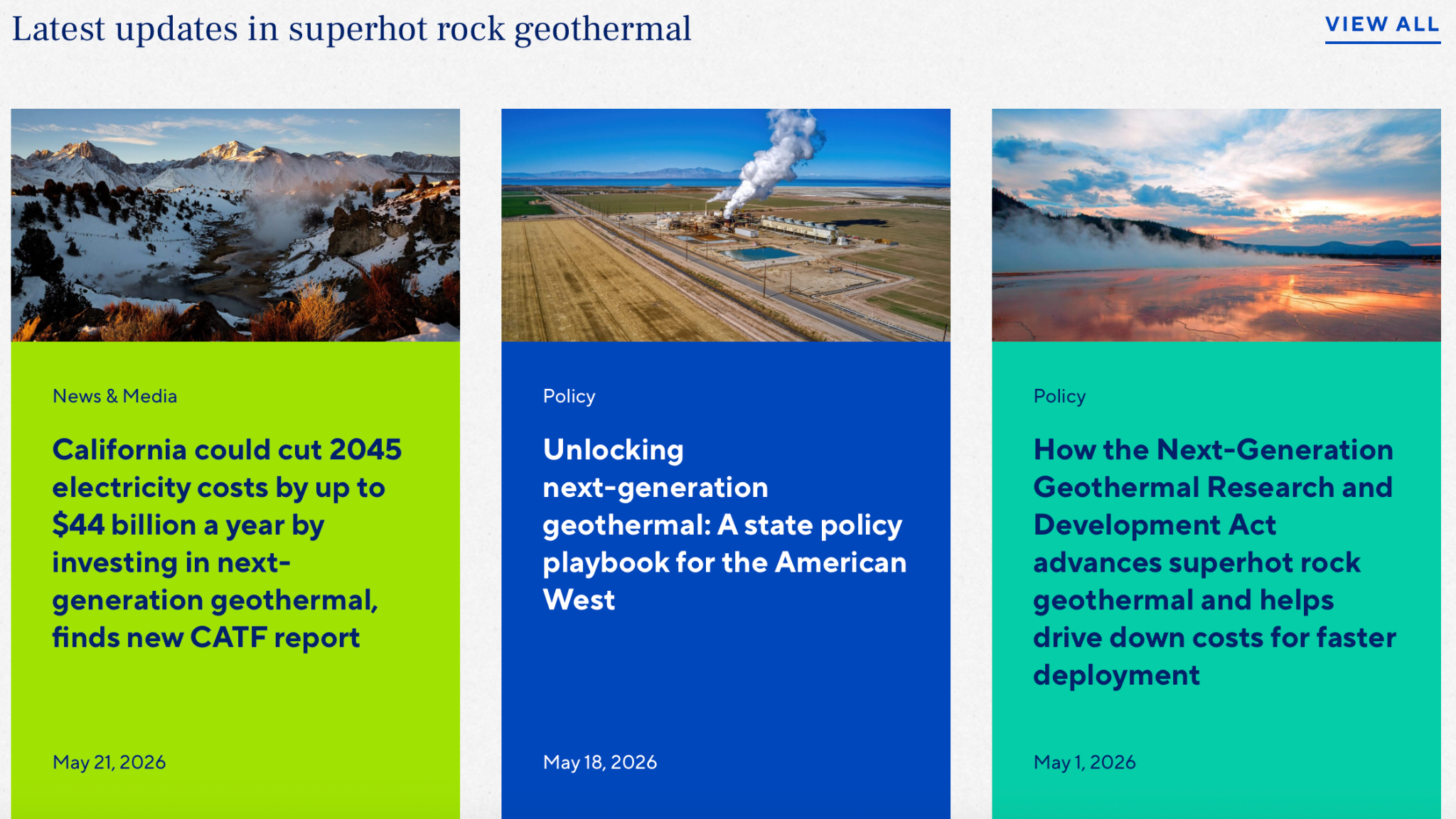
Two CATF employees also wrote an op-ed in Utility Dive in May touting the potential to “unlock a geothermal revolution.”
On the CATF website they have a page where they say they are “examining all options with an open mind and clear vision.” These options are supposed to be for decarbonization. Take a look at what they see as the options.
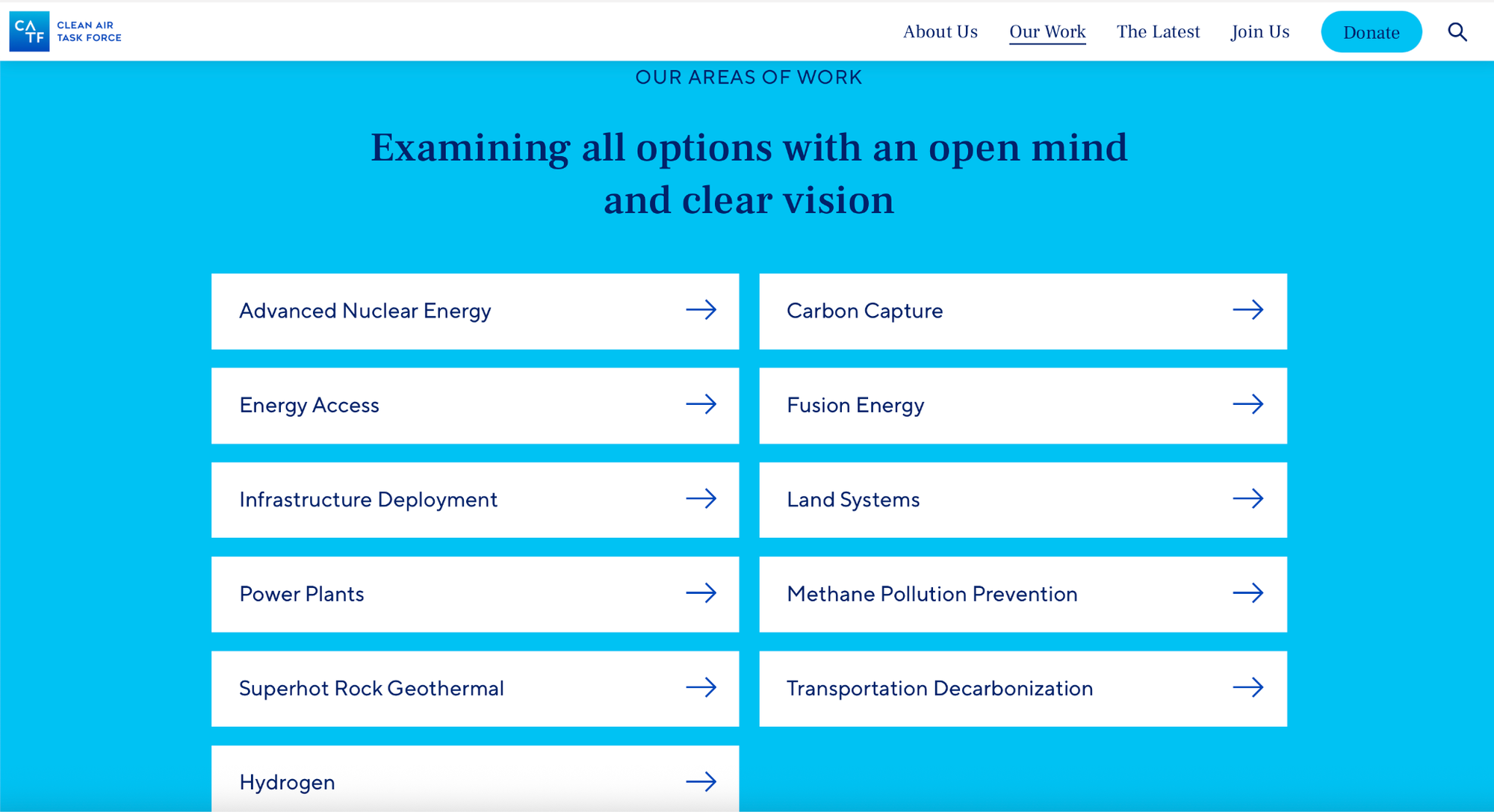
I see several programs that are favorites of the oil and gas industry but nothing about solar, wind or storage. Carbon capture? In 2026? This content would look at home on Exxon’s website.
The Environmental Defense Fund is also a supporter of enhanced geothermal and put out this piece in late April.
So the big policy-influencing environmental non-profits are all on board with enhanced geothermal and touting it as the power source of the future.
There are also some new non-profits that are supporting geothermal. Have you heard of the New Energy Industrial Strategy (NEIS) Center? If not you can learn more about it on RMI’s site as they appear to have created it or as it says on the NEIS website, RMI “hosts” the center. In May the NEIS wrote a piece on the five biggest trends in energy and included Fervo’s IPO as one of them while referencing RMI’s recent work on the topic.
The NEIS center has many partners including, “Columbia Center on Global Energy Policy, Carnegie Endowment for International Peace, RMI, Oxford Department of International Development, Johns Hopkins, Rhodium Group, University of Pennsylvania, Third Way, Loom, Bruegel, The W.E. Upjohn Institute for Employment Research, and more.”
Another new player in this space is the Center for Public Enterprise which put out two reports touting enhanced geothermal including the oddly titled, “Committing to the Drill Bit.” In April 2025 CPE released a report stating that for geothermal energy, “CPE recommends that Western states establish a Mountain West consortium to advance regulatory harmonization and coordinate a regional investment strategy.” Why is an East coast-based organization that writes about housing and tax policy (but not solar power), weighing in on this topic? Who would listen to them?
Apparently a bunch of governors as their recommendation was taken up and the new organization was announced in May.
“Utah and its Rocky Mountain neighbors of Colorado, Arizona and New Mexico are creating the Mountain West Geothermal Consortium to streamline the development of geothermal energy, the states announced on Wednesday.”
It’s a tangled web. NEIS lists Columbia’s Center for Global Energy Policy (CGEP) as a partner. You won’t be surprised to learn that CGEP was promoting enhanced geothermal in April. Now CGEP takes a lot of money from the oil and gas industry and was instrumental in helping overturn the crude oil export ban in 2015 – the top policy goal of the oil industry at that time. I wrote about the coordinated public relations effort to make that happen in 2015. Interestingly enough one of those pieces was titled, “Elites Agree Oil Crash Crisis Is Opportunity To Lift Crude Export Ban” I quoted Marianne Kah and her strong support for lifting the export ban. At the time, she was “chief economist for ConocoPhillips.” One of her arguments for dismissing the obvious environmental impacts of lifting the ban was to say that Larry Summers already addressed that “most eloquently.” Protip: he did not.
Why am I veering off into decade old news? Well, Marianne Kah co-authored the CGEP piece supporting enhanced geothermal.
While Summers may not be out in public these days due to his Epstein connections, his support for lifting the crude oil export ban came in large part from a talk at the Brookings Institute. Guess who put out a piece supporting geothermal in March? Brookings.
You really can’t blame them for using the same playbook they used to lift the crude oil export ban. It worked. In addition to the think tanks and academia the clean energy press also was on board. Canary Media and David Roberts of Volts both ran positive pieces on Fervo. Canary and Volts both have connections to RMI.
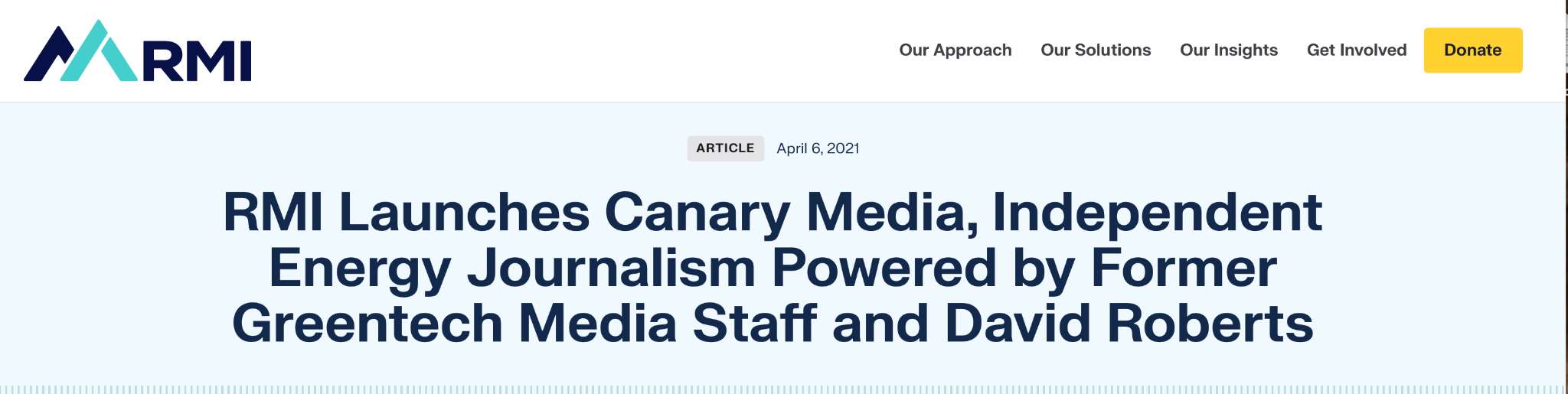
So the oil industry is on board. The big environmental orgs are a big part of this. The academics and the think tanks old and new are on board. The clean energy media is on board. Why?
The Gates Factor
Bill Gates is an investor in Fervo and did this promo video for them last year.
What I like most about this video is that while they are selling enhanced geothermal, there are wind turbines everywhere in the background. Gates also wrote about Fervo in September 2025 and stated that “Geothermal is one of the most promising ways to deliver clean energy that’s reliable and affordable.”
For those of you who are billionaires like Gates, perhaps geothermal is affordable. For the rest of us it’s a very expensive way to produce electricity compared to the current technologies taking over power generation.
Gates makes another claim that you might find interesting after reading about Fervo’s issues with water loss. “Fervo’s technology captures all the water that would’ve been lost and recirculates it underground to keep the system running.”
Bill Gates is a big influence in the big money world of U.S. non profits. RMI touted their work with him on “low emissions” hydrogen which is also known as blue hydrogen. I’ve been writing about blue hydrogen since the oil and gas industry began pushing it It was clear in 2021 that the real role blue hydrogen would play would be as another oil and gas industry distraction and delay tactic that relied on everyone ignoring that it 1) wasn’t clean and 2) wasn’t possible due to the failure of carbon capture technology and the high methane emissions from natural gas production.
In 2022, I wrote an op-ed for The Intercept noting again how the industry’s ‘pivot’ to blue hydrogen strategy wasn’t going to work.”
The oil and gas industry admitted that blue hydrogen was a way for them to keep using methane (natural gas) as blue hydrogen is made from methane. We are facing a methane emergency and must rapidly reduce emissions to address climate change. Supporting blue hydrogen is just pushing the oil and gas industry’s agenda for them. Why would Gates and RMI do this? I would argue they seem to be doing it again with enhanced geothermal.
Is Gates big money influencing the efforts to promote the company he invested in? Or, like efforts to push clean hydrogen, is this a coordinated effort to delay the adoption of solar, wind and storage to protect the future of the nuclear, internal combustion vehicle and geothermal industries? It is interesting to note that while Bill Gates says he wants to invest in companies and technologies that help address climate change, you don’t see him talking about solar, wind, or the electrification of transportation – the real solutions we have to address climate change, air pollution, water pollution and to lower the cost of living. Gates has also shut down Breakthrough Energy, his clean energy and climate focused investment group.
In 2020 I was quoted in a VICE article noting that Gates was a hypocrite when it came to climate change. I assume I was quoted as there weren’t many people willing to say that on record back then. I stand by that conclusion.
Things That Make You Say “hmmmm”
Why are these big environmental groups supporting a technology that is backed by the oil industry, is still in its infancy, and will never be economically competitive even if it hits its most optimistic future forecasts? These strange behaviors are normally explained by following the money.
So let’s talk about Jessica Uhl.
“Jessica is a senior advisor with the Three Cairns Group along with other energy and climate initiatives. She has served on the boards of Shell, Goldman Sachs, and GE and as an advisor to Breakthrough Energy. She is currently on the boards of RMI, OpenMinds, and Mission Possible Partnership. Jessica is an advisory board member for the Columbia Center for Global Energy and on the Global Leadership Council of GEAPP.
Jessica was previously president of GE Vernova and, prior to GE Vernova, she was the CFO of Shell plc. Jessica graduated from UC Berkeley and received an MBA from INSEAD.”
If you don’t know, GE Vernova manufactures natural gas turbines that are in high demand right now. It is an interesting resume including stints with some of the biggest companies in global finance and oil and gas and connections to Bill Gates Breakthrough and the aforementioned Columbia Center for Global Energy Policy and, if you noticed, a seat on the board of RMI.
She certainly seems to be well connected in the world of people pushing enhanced geothermal. Would it surprise you to learn she is on the board of Fervo too?
Perhaps this is all coincidence. Perhaps what appears like a well coordinated public relations effort that includes the Trump Administration, clean energy media, Bill Gates, the oil industry, the big U.S. non-profits purporting to be for the environment while doing the work of the oil and gas industry, the established academic policy groups funded by oil and gas, the brand new think tanks also jumping on board the enhanced geothermal bandwagon, perhaps all of this happened independently? I don’t think so.
Enhanced geothermal technology is far from proven and has never operated at commercial scale. Even the most optimistic future forecasts for the costs for enhanced geothermal power production mean it will never be economically competitive. The technology is currently only feasible in the western part of the U.S. which is also facing a serious water crisis. And due to these constraints, even if enhanced geothermal reached its most lofty goals, it would still just be a small percentage of total power produced in the U.S. And that is an interesting point to consider in all of this. What if pushing a technology that could never actually replace gas power at scale is a great way to ensure the future of gas power? What would a GE Vernova executive think of that?
Blowout
Not long after the IPO, there were reports that Fervo suffered a well blowout. This is not good news in the well drilling business. But you likely didn’t hear about it as it got very little coverage aside from at Axios Pro, which is behind a paywall. Even so soon after the massive media blitz that supported the IPO, there were no articles investigating what this means to Fervo and Fervo ain’t talking about it either.
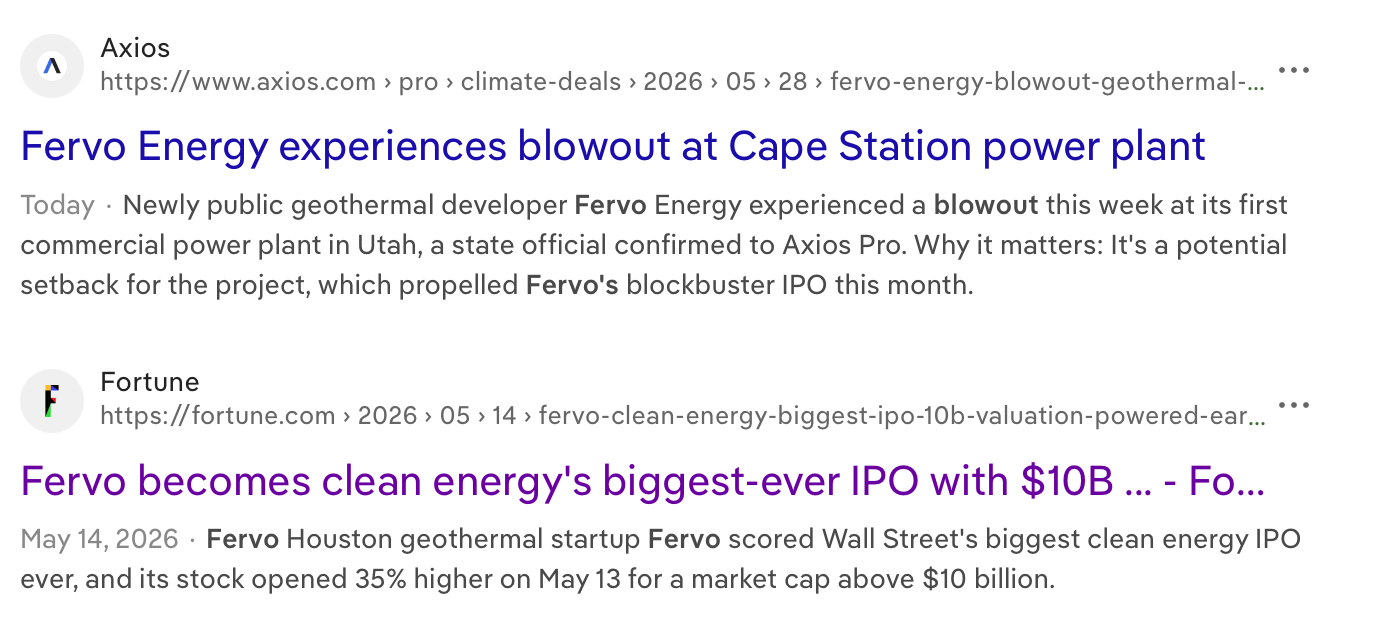
Will this blowout put Fervo’s agreement with Google at risk? They are on a tight timeline to start producing power so it’s not a good development. Of course, Google likely isn’t that concerned as Google is investing heavily in projects that deliver clean power around the clock and in 2025 bought the data center and power company Intersect (since renamed IPX Power) which “begins operations with a portfolio of 4.4GW of solar photovoltaic capacity and 8.8 gigawatt-hours (GWh) of battery storage either under construction or already operational in California and Texas.“ The clock is ticking for Fervo and enhanced geothermal.
I received this email recently with the subject line “Everybody loves geothermal.”

Although it is clearly an unpopular opinion right now, I do not. Based on technological and economic reasons that are glaringly obvious. Seems like we really should be asking why this technology is so popular. Last week Fervo released its quarterly financial results and held its first investor call since going public. The analyst from JP Morgan got the first question and asked what we all want to know.
“Are you able to quantify what that looks like on a drilling cost per foot, how that compares to Cape 1 maybe, and how you’re thinking about achieving your medium to longer term targets with bringing that down closer to $3,000 overall project costs?” Mark Strouse, Analyst, J.P. Morgan
Fervo’s CEO responded with, “We’re not going to disclose a dollar per foot metric on an individual well basis.”
Don’t believe the hype.
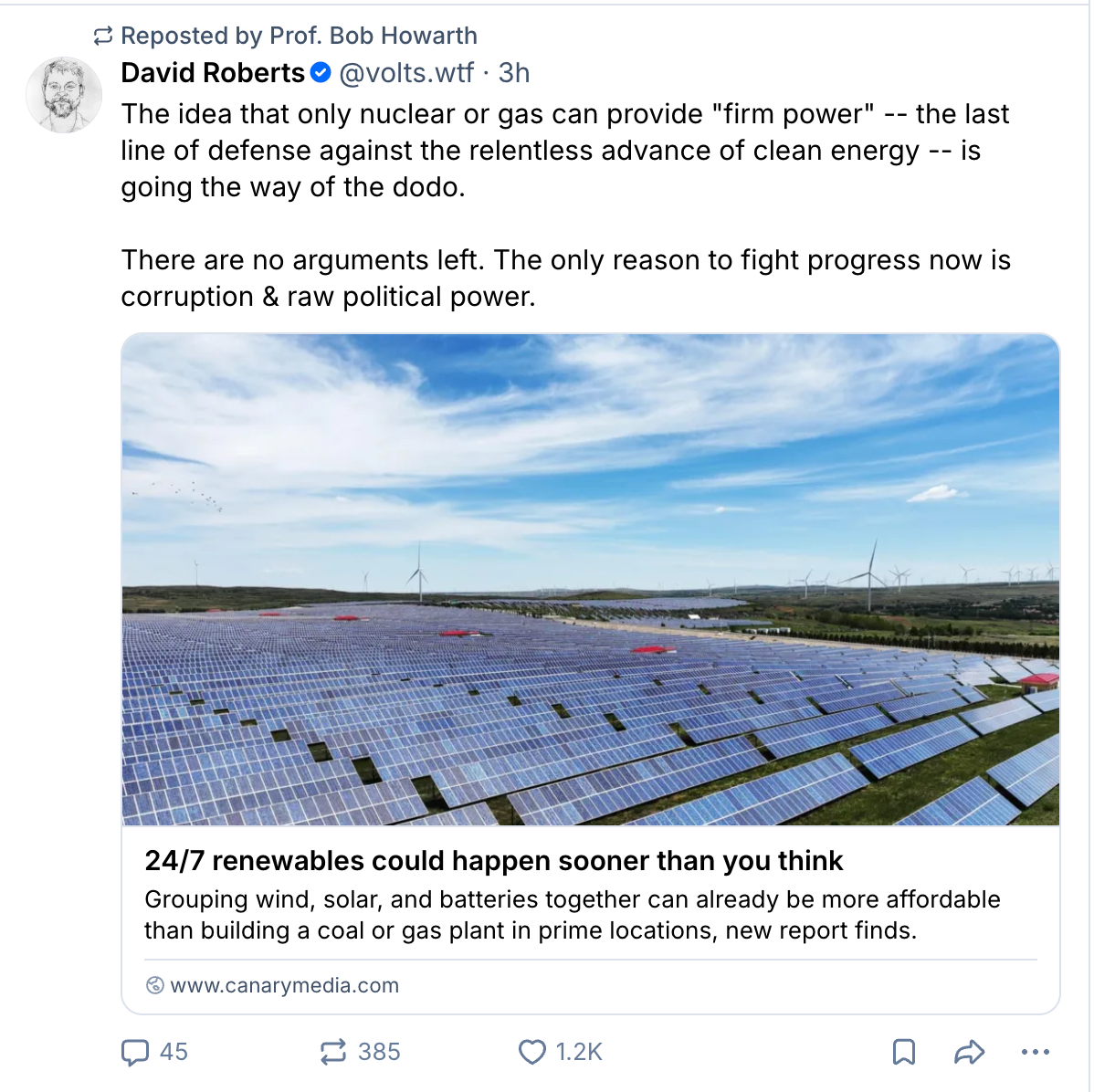
End note: David Roberts has been a champion of Fervo as mentioned earlier. However, since the Fervo IPO he essentially made the case for why Fervo’s technology is unnecessary by reposting an article from Canary Media. He argues, correctly, that the idea that we need firm power is obsolete. Which means there is no need for expensive and water-intensive enhanced geothermal energy.
Update (June 30): Industry analysts Enervus have now published something that echoes my concerns.
"According to Enverus Intelligence® Research’s Fervo Valuation, today’s valuation assumes successful execution against three performance targets that have yet to be demonstrated at commercial scale."
Comments ()